
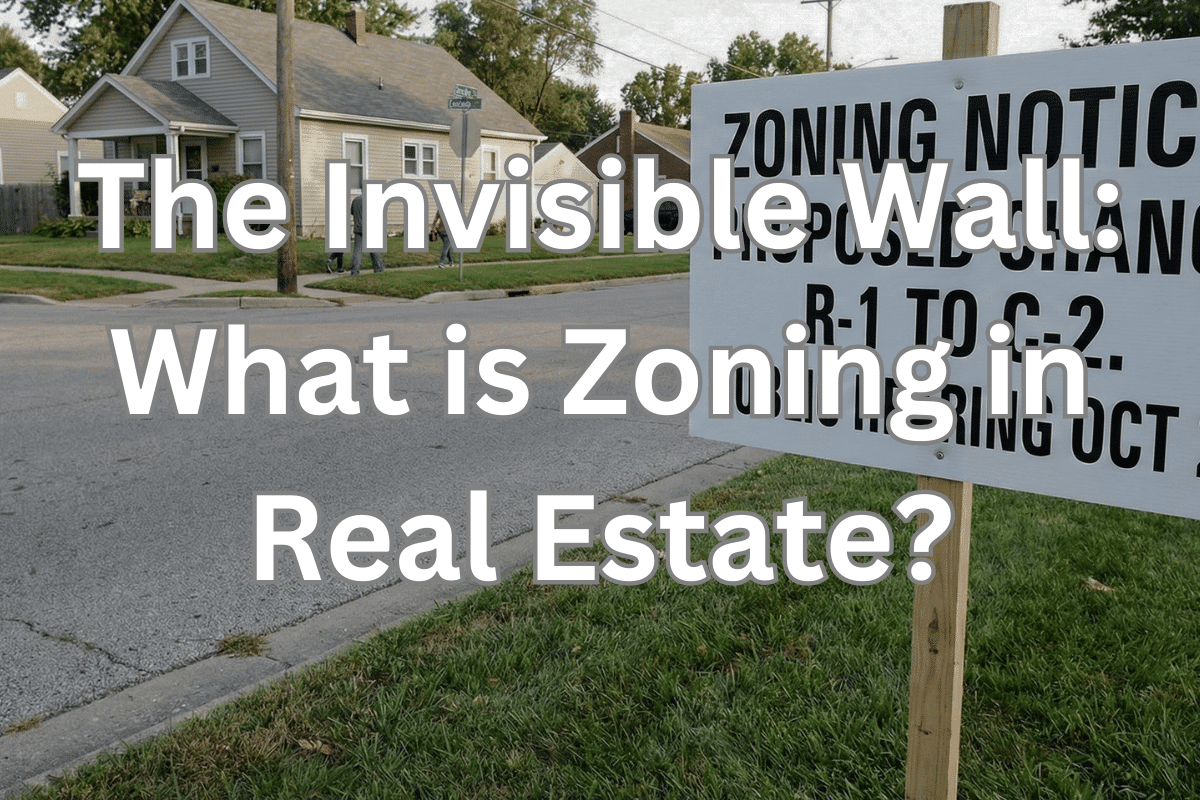
Picture this: you’ve found the perfect plot of land, you’ve designed your dream tiny home, and you’re ready to start building. But then, you hit an invisible wall—zoning. For many aspiring homeowners, especially those looking to embrace the tiny home lifestyle, zoning laws can feel like an insurmountable obstacle. But what exactly is zoning, why does it exist, and how does it impact the tiny home movement?
In this blog, we’ll demystify the concept of zoning, explore its implications for traditional and alternative housing, and dive into the challenges and opportunities it presents for tiny home enthusiasts. From understanding the “Accessory Dwelling Unit” (ADU) loophole to navigating the legal gray areas of mobile tiny homes, we’ll break down everything you need to know about zoning and its role in shaping the future of tiny living.
Table of Contents
- Demystifying Zoning: What Is It and Why Does It Exist?
- Tiny Homes and the Regulatory Gray Area
- The “Accessory Dwelling Unit” Loophole
- Mobile vs. Fixed: The RV vs. Tiny Home Dilemma
- Navigating the Bureaucracy: Permits, Inspections, and Red Tape
- Future of Tiny Living: Advocacy and Emerging Solutions
- Deep Dive Podcast
- Related Questions
Demystifying Zoning: What Is It and Why Does It Exist?
Zoning is a system of land-use regulations that dictate how property can be used within a specific area. These regulations are established by local governments to organize urban development, manage growth, and promote public safety. In essence, zoning laws act as a blueprint for how cities and towns are built and maintained.
Why Do Zoning Laws Exist?
Zoning laws serve several purposes, including:
- Maintaining Order: By separating residential, commercial, industrial, and agricultural areas, zoning laws help prevent incompatible land uses (e.g., a factory next to a school).
- Protecting Property Values: Zoning regulations ensure that property owners are not negatively impacted by developments that could decrease the value of their homes or businesses.
- Promoting Public Safety: Zoning laws often include building codes and safety standards designed to protect residents from hazards like fire, flooding, or structural collapse.
While zoning is essential for creating functional and safe communities, it can also be restrictive—especially for those looking to build unconventional homes like tiny houses.
Zoning Applies to Structures, Not Just Land Use
Many people assume zoning only dictates what kind of activities can take place on a piece of land (e.g., residential vs. commercial). However, zoning also regulates the types of structures allowed on that land, including their size, height, and placement.
For traditional homes, this means adhering to specific requirements for lot size, setbacks (the distance between a structure and property lines), and building height. For tiny homes, these same rules can create significant challenges, as many zoning codes were written with larger, traditional homes in mind.
Tiny Homes and the Regulatory Gray Area
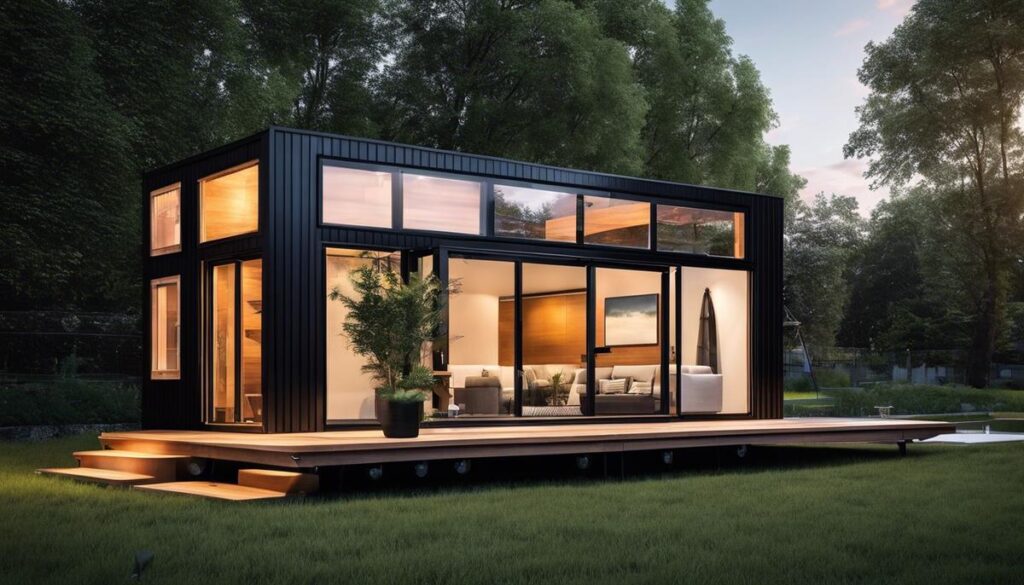
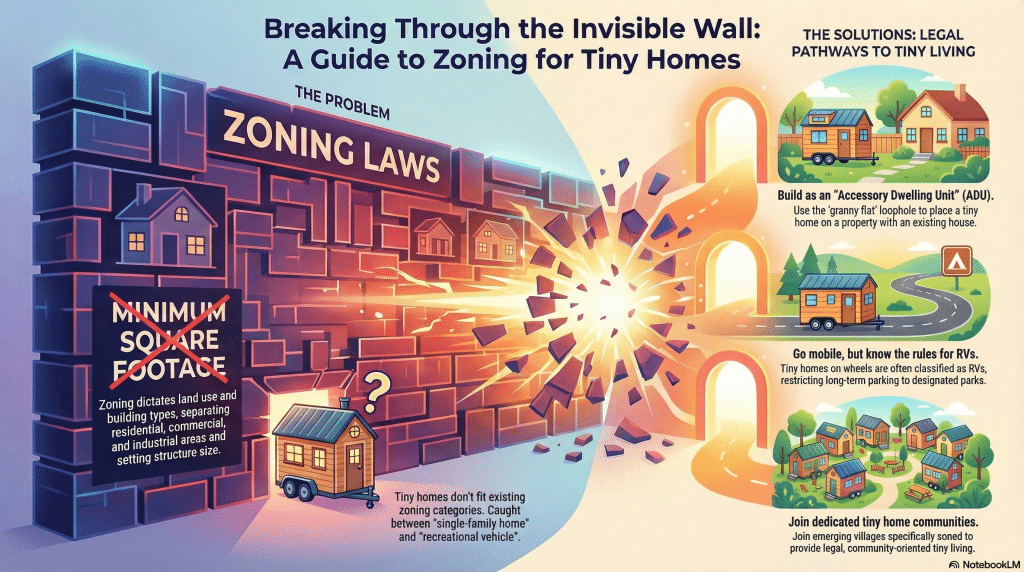
One of the biggest hurdles for tiny home enthusiasts is that tiny homes often don’t fit neatly into existing zoning categories. Are they single-family homes? Accessory structures? Recreational vehicles? The answer varies depending on the municipality, leaving many tiny homeowners in a legal gray area.
For example, some zoning codes require a minimum square footage for residential structures, effectively disqualifying many tiny homes. Others prohibit long-term habitation in structures classified as RVs or mobile homes, even if they meet all safety and utility requirements.
This lack of clarity has led to the development of creative workarounds, such as the “Accessory Dwelling Unit” loophole.
The “Accessory Dwelling Unit” Loophole
Accessory Dwelling Units (ADUs) are secondary housing units located on the same property as a primary residence. They’re often referred to as “granny flats,” “in-law suites,” or “backyard cottages.” For tiny homes, ADU ordinances have become one of the most common ways to gain legal approval.
Attached vs. Detached ADUs
ADUs can be either attached to the primary residence (e.g., a basement apartment or garage conversion) or detached (e.g., a standalone tiny home in the backyard). The distinction between attached and detached ADUs is critical, as it often determines the size restrictions, setbacks, and utility requirements.
- Attached ADUs: These are typically easier to approve, as they share utilities and structural components with the main house. However, they may be subject to stricter size limits.
- Detached ADUs: These offer more independence and flexibility but often require separate utility hookups and must adhere to stricter setback requirements.
Size Restrictions and Utility Hookups
Most ADU ordinances impose size restrictions, typically capping the unit at 800–1,200 square feet. While this is larger than most tiny homes, it still allows for small-scale living.
Utility hookups can be another challenge, as many municipalities require ADUs to connect to the same water, sewer, and electrical systems as the primary residence. This can add significant costs to the project, especially for detached units.
Despite these hurdles, ADU ordinances represent a promising pathway for tiny homes on foundations, offering a way to integrate them into existing neighborhoods legally.
Mobile vs. Fixed: The RV vs. Tiny Home Dilemma
For those who prefer mobility, tiny homes on wheels offer the freedom to travel while still having a place to call home. However, this flexibility comes with its own set of legal challenges.
Legal Distinctions Between RVs and Tiny Homes
In many municipalities, tiny homes on wheels are classified as recreational vehicles (RVs), which are subject to different regulations than permanent structures.
- RVs: Designed for temporary use, RVs are typically restricted to campgrounds or RV parks. Long-term habitation outside of these designated areas is often prohibited.
- Tiny Homes on Wheels: While they may look like RVs, tiny homes on wheels are often built to residential standards, with features like full kitchens and bathrooms. However, if they’re classified as RVs, they may still be subject to the same restrictions.
Challenges of Permaculture Zoning
For those looking to park their tiny home on private land, zoning laws can create additional obstacles. Many rural areas have “permaculture zoning” that allows for alternative housing, but even these areas often have restrictions on long-term habitation in mobile structures.
Navigating these regulations requires careful planning and a deep understanding of local zoning codes—a process that can be frustrating but ultimately rewarding for those committed to the tiny home lifestyle.
Navigating the Bureaucracy: Permits, Inspections, and Red Tape
Building or parking a tiny home legally often involves navigating a maze of permits, inspections, and other bureaucratic hurdles. Here’s what you need to know to stay on the right side of the law.
The Permit Process
Whether you’re building a tiny home on a foundation or converting an existing structure into an ADU, you’ll likely need several permits, including:
- Building Permits: Required for new construction or major renovations.
- Electrical and Plumbing Permits: Ensures that utility systems meet safety standards.
- Zoning Permits: Confirms that the project complies with local land-use regulations.

Inspections and Building Codes
Once permits are approved, your tiny home will need to pass a series of inspections to ensure it meets local building codes. These codes vary by location but typically cover structural integrity, fire safety, and utility systems.
Tips for Working with Zoning Departments
- Do Your Research: Familiarize yourself with local zoning codes before starting your project.
- Be Persistent: Zoning departments can be slow to respond, so don’t be afraid to follow up.
- Seek Professional Help: Consider hiring a zoning consultant or working with a builder experienced in tiny homes.
Future of Tiny Living: Advocacy and Emerging Solutions
Despite the challenges, the future of tiny living looks bright. Advocacy groups and forward-thinking municipalities are working to update zoning laws and create more opportunities for tiny home enthusiasts.
Tiny Home Communities
Tiny home villages are emerging as a solution to zoning challenges, offering legal, community-oriented spaces for tiny living. Examples include:
- Community First! Village (Austin, TX): A 51-acre development providing affordable tiny homes for individuals transitioning out of homelessness.
- Tiny Tranquility (Oregon): A coastal community designed specifically for tiny home dwellers.
Advocacy Efforts
Organizations like the American Tiny House Association (ATHA) are pushing for zoning reforms that recognize tiny homes as a legitimate housing option. By joining these efforts, you can help shape the future of tiny living in your community.
Resources for Getting Involved
- Local Advocacy Groups: Connect with organizations working to update zoning laws in your area.
- Online Communities: Join forums and social media groups to share experiences and learn from others.
- Educational Resources: Attend workshops or webinars on tiny home construction and zoning.
Zoning laws may feel like an invisible wall, but with the right knowledge and resources, they can be navigated. Whether you’re dreaming of a tiny home on wheels or a backyard ADU, understanding zoning is the first step toward turning your vision into reality.
The tiny home movement is more than just a trend—it’s a shift toward more sustainable, intentional, and affordable living. By advocating for updated zoning laws and supporting innovative communities, we can help pave the way for a future where tiny living is accessible to all.
Are you ready to embrace the tiny home lifestyle? Share your thoughts in the comments and join us in breaking down the invisible walls of zoning!
Deep Dive Podcast
Check out our Deep Dive Podcast.
Real Estate Crunch gives you real property and real estate information and advice. We offer a free monthly newsletter; you can sign up for our newsletter by clicking here.
We also have a weekly podcast called “Real Estate Crunch,” found on all major podcast platforms. Listen to our podcast by clicking here.
Follow us on our social media platforms – Facebook and Instagram.
Related Questions
Prefab Vs. Modular Homes Explained
Prefab housing is prefabricated housing built in a factory-controlled setting and assembled on-site. Modular homes are also made in a factory study and assembled on-site, except modular homes usually refer to homes where more complete sections are built on-site.
By clicking here, you can read more about Prefab Vs. Modular Homes Explained.
Boxabl Housing And Utilities Hook-Up
Boxabl is a home that will unfold in an hour. To set up your home on your land, you need to have all the utility hookups in place on the land. Once you have the utility hooks ups in the right place, the Boxabl is straightforward to set up.
By clicking here, you can read more about Boxabl Housing And Utilities Hook Up.