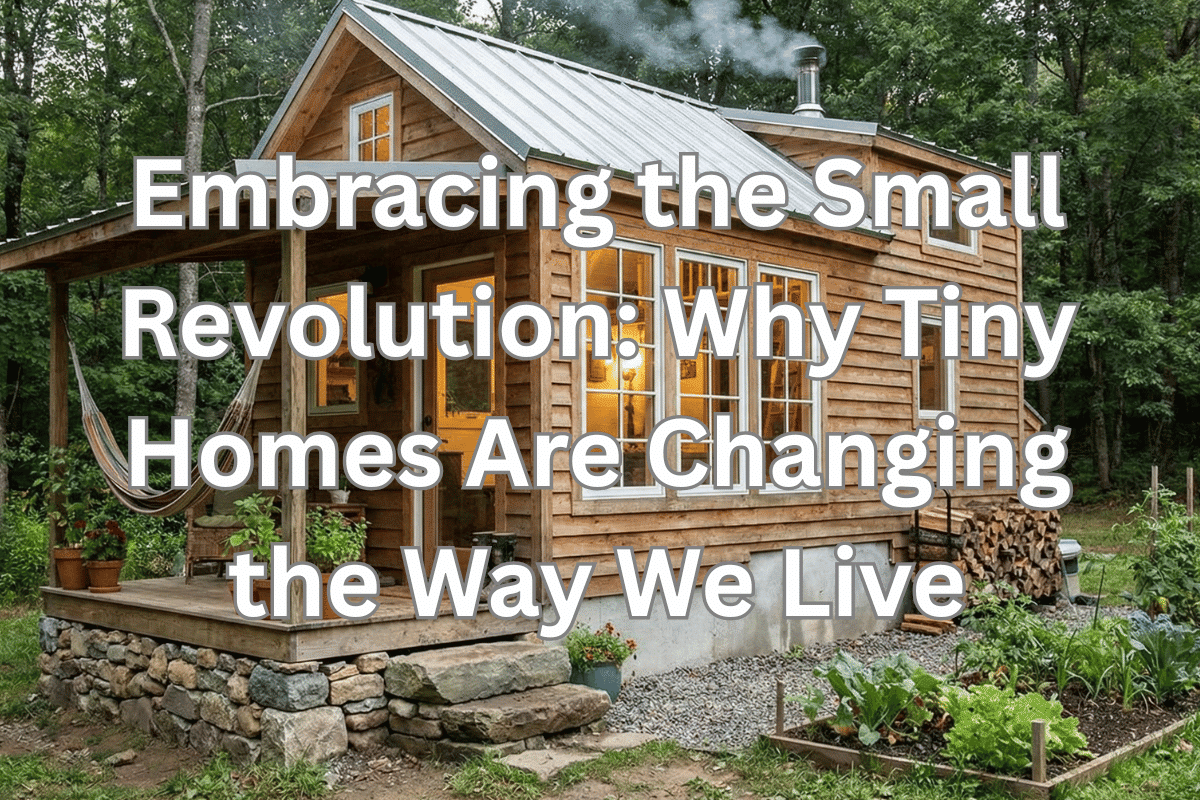
Ever wonder if you could fit your dream life into a space smaller than your living room? What if I told you that embracing a tiny home isn’t about sacrificing, but about gaining something incredible? It’s time to challenge everything you thought you knew about living large. Let’s dive into the transformative world of tiny homes—a movement redefining what it means to live well, live free, and live intentionally.
In a country like the United States, where bigger is often equated with better, the idea of downsizing can feel radical. But when you look closer, you’ll see that the tiny home movement isn’t about giving up; it’s about reclaiming. It’s about trading excess for freedom, clutter for clarity, and wastefulness for sustainability.
Table of Contents
- Unveiling the “Why” Behind the Tiny Home Movement
- Beyond the Blueprint: Innovative Design
- The Lifestyle Shift: More Than Just Four Walls
- Challenges & Realities: The Unfiltered Look
- Is Tiny Living For You? Next Steps
- A Call to Action
- Deep Dive Podcast
- Related Question
So, how about a tiny home? Let’s explore why this small revolution is sweeping the nation and why it might just be the perfect fit for you.
Unveiling the “Why” Behind the Tiny Home Movement
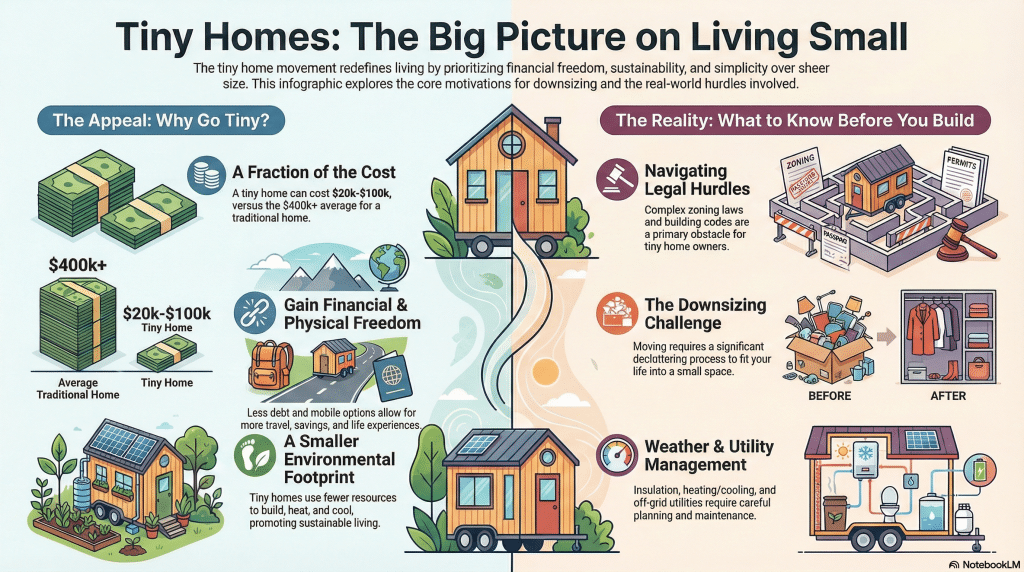
The tiny home movement isn’t just a trend—it’s a lifestyle revolution. But what’s driving people to trade sprawling houses for spaces that could fit inside a two-car garage? The answer lies in three powerful motivators: cost, freedom, and sustainability.
1. Cost: Living Large Without the Price Tag
The financial appeal of tiny homes is undeniable. With the average U.S. home costing over $400,000, many people are finding themselves priced out of the traditional housing market.
Tiny homes, on the other hand, can cost anywhere from $20,000 to $100,000 depending on size, materials, and customization – or course excluding land costs.
But it’s not just about the initial cost. Tiny homes are more affordable to maintain. Utility bills are lower, property taxes are reduced, and there’s less space to fill with unnecessary stuff.
For many, this means financial freedom—more money to travel, save, or invest in experiences rather than things.

2. Freedom: Owning Your Life, Not Your Mortgage
Imagine waking up in your cozy, perfectly designed tiny home, knowing you’re debt-free. Tiny homes offer a level of freedom that traditional housing often doesn’t. Without a massive mortgage hanging over your head, you’re free to work less, explore more, and focus on what truly matters.
Many tiny homes are also mobile, giving you the freedom to travel while still having a place to call home. Whether it’s parking your home on a scenic mountainside or setting up near the beach, tiny living allows you to take your life on the road.
3. Sustainability: A Smaller Home, A Bigger Impact
The environmental benefits of tiny homes are another major draw. With a smaller footprint, tiny homes use fewer resources to build, heat, and cool. Many are designed with sustainability in mind, incorporating solar panels, composting toilets, and rainwater collection systems.
By embracing a tiny home, you’re not just reducing your living space—you’re reducing your impact on the planet. It’s a way to live in harmony with the environment while still enjoying modern comforts.
Beyond the Blueprint: Innovative Design
One of the most fascinating aspects of tiny homes is how they maximize every square inch of space. These aren’t just small houses—they’re marvels of innovative design.
1. Smart Storage Solutions
In a tiny home, every inch counts. Hidden compartments, under-floor storage, and built-in shelving are just a few examples of how tiny homes make the most of limited space.
For example, a staircase might double as a series of pull-out drawers, or a bed might lift to reveal a storage area underneath. Vertical space is also utilized to its fullest, with hanging racks, lofted sleeping areas, and wall-mounted storage.
2. Multi-Functional Areas
In a tiny home, one space often serves multiple purposes. A dining table might fold down from the wall, doubling as a workspace during the day. A couch might convert into a bed at night.
This multi-functionality doesn’t just save space—it adds versatility to your living environment. It’s about designing a home that adapts to your needs, not the other way around.
3. Surprising Amenities and Luxuries
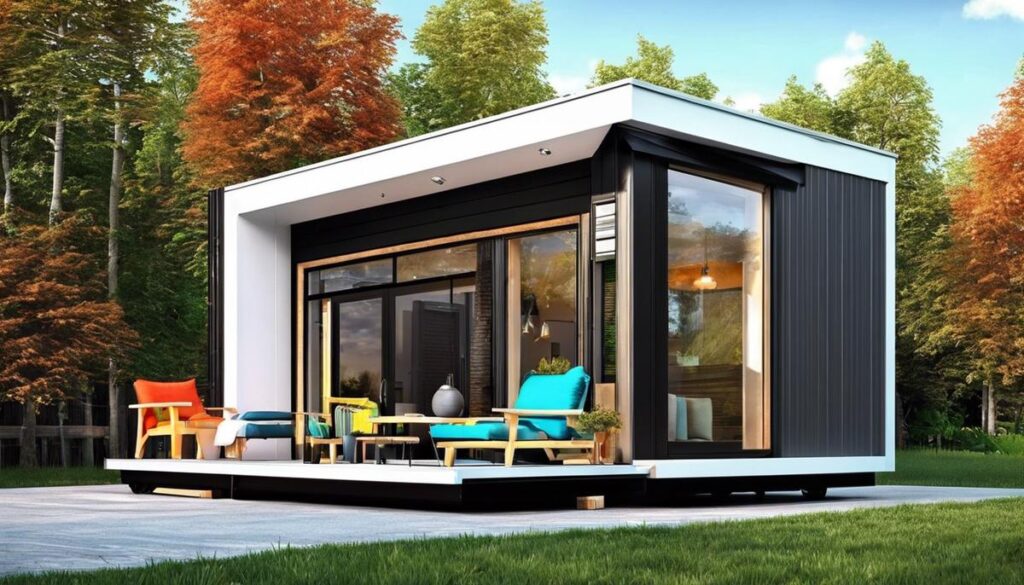
Think tiny homes mean giving up comfort? Think again. Many tiny homes boast amenities you’d expect to find in high-end apartments—heated floors, full-sized appliances, and even soaking tubs.
Whether you prefer a rustic cabin vibe or an ultra-modern aesthetic, tiny homes can be customized to suit your style. From sleek, minimalist designs to cozy, wood-paneled interiors, there’s a tiny home for every taste.
The Lifestyle Shift: More Than Just Four Walls
Living in a tiny home isn’t just about the space—it’s about the lifestyle. It’s about embracing a new way of living that prioritizes freedom, connection, and sustainability.
1. Financial Freedom: Debunking Myths
One of the biggest misconceptions about tiny homes is that they’re a step down. In reality, they’re a step up in terms of financial freedom.
By spending less on housing, tiny home dwellers can focus on what truly matters—whether that’s traveling, pursuing a passion, or simply enjoying life without the burden of debt.
2. Environmental Impact: Living Lightly
Tiny homes are a testament to the idea that less is more. With a smaller footprint, they consume fewer resources and produce less waste. Many tiny homes are built with eco-friendly materials and feature sustainable technologies, making them a smart choice for environmentally conscious individuals.
3. Community and Connection
An unexpected benefit of tiny living is the sense of community it fosters. Tiny home villages are popping up across the country, creating tight-knit communities where neighbors share resources, skills, and experiences.
Living in a tiny home often means stepping outside more, engaging with your surroundings, and connecting with others in meaningful ways. It’s a lifestyle that prioritizes relationships over possessions.
Challenges & Realities: The Unfiltered Look
While tiny living has its perks, it’s not without its challenges. Here’s a candid look at some of the realities you might face when embracing the tiny home lifestyle.
1. Zoning Laws and Legal Hurdles
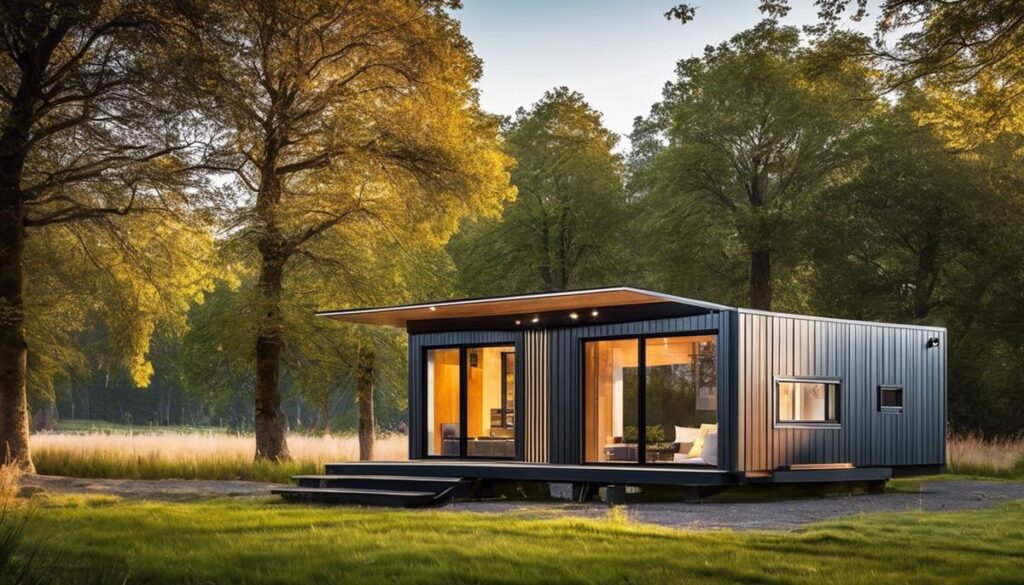
One of the biggest obstacles for tiny home enthusiasts is navigating zoning laws and building codes. In some areas, tiny homes are classified as RVs, which can limit where you can park or build.
Before diving in, it’s important to research local regulations and consider working with a builder who’s experienced in navigating these legal complexities.
2. Downsizing and Decluttering
Moving into a tiny home requires a significant amount of downsizing. Letting go of possessions can be an emotional journey, but it’s also incredibly liberating.
The key is to focus on what truly adds value to your life. By keeping only the essentials, you’ll create a space that feels intentional and clutter-free.
3. Weather Adaptability and Utilities
Living in a tiny home means being more attuned to your environment. In colder climates, insulation and heating are crucial, while in warmer areas, ventilation and cooling systems are a must.
Utility management is another consideration. Many tiny homes are off-grid, relying on solar panels, propane, and rainwater collection. While this can reduce costs, it requires careful planning and maintenance.
Is Tiny Living For You? Next Steps
If you’re intrigued by the idea of tiny living, the next step is to determine if it’s the right fit for you. Here’s a quick self-assessment to help you decide:
- Are you ready to downsize and declutter your life?
- Do you value experiences over possessions?
- Are you seeking financial freedom and a simpler lifestyle?
- Are you open to living in a smaller space and adapting to its challenges?
- Do you care about reducing your environmental impact?
If you answered “yes” to most of these questions, tiny living might be worth exploring further.
Resources for Further Exploration
- Reputable Builders: Look for experienced tiny home builders who can guide you through the process. We admire ZenniHome, their innovative concept, and the incredible work they’re doing in this space.
- Communities: Explore tiny home villages and online forums to connect with like-minded individuals.
- Books and Documentaries: Dive into resources like The Big Tiny by Dee Williams or the Netflix documentary Tiny: A Story About Living Small.
A Call to Action
The tiny home movement isn’t just about downsizing—it’s about upgrading your life. It’s about living with intention, finding freedom, and creating a lifestyle that aligns with your values.
If you’re ready to take the leap, subscribe for more content on alternative living and share your tiny home dreams in the comments. Together, we can reimagine what it means to live large—one tiny home at a time.
Deep Dive Podcast
Check out our Deep Dive Podcast.
Real Estate Crunch gives you real property and real estate information and advice. We offer a free monthly newsletter; you can sign up for our newsletter by clicking here.
We also have a weekly podcast called “Real Estate Crunch” on all major podcast platforms. Listen to our podcast by clicking here.
Follow us on our social media platforms – Facebook and Instagram.
Related Question
Faster, Cheaper, And More Efficient: Benefits Of Prefab Homes
Prefab homes are the new way of building houses and other buildings. Pre Fab homes are built entirely or partly off-site, assembled, and placed on the foundation. This has many advantages to building houses with more advanced technologies and materials. This means homes can usually be built quicker and cheaper than a standard-built home.
By clicking here, you can read more about Faster, Cheaper, And More Efficient: Benefits Of Prefab Homes.
Prefab Vs. Modular Homes Explained
Prefab housing is prefabricated housing built in a factory-controlled setting and assembled on-site. Modular homes are also made in a factory study and assembled on-site, except modular homes usually refer to homes where more complete sections are built on-site.
By clicking here, you can read more about Prefab Vs. Modular Homes Explained.
Prefab Homes Delivered & Setup: Modern Solution For Housing
Prefab homes are built in factories using standardized components; these homes are delivered to the buyer’s desired location either fully or partially finished, ready for quick assembly onsite. With companies offering delivery and setup services, the process has become even more streamlined, eliminating the need for costly tradespeople and reducing wait times.
By clicking here, you can read more about Prefab Homes Delivered & Setup: Modern Solution For Housing.