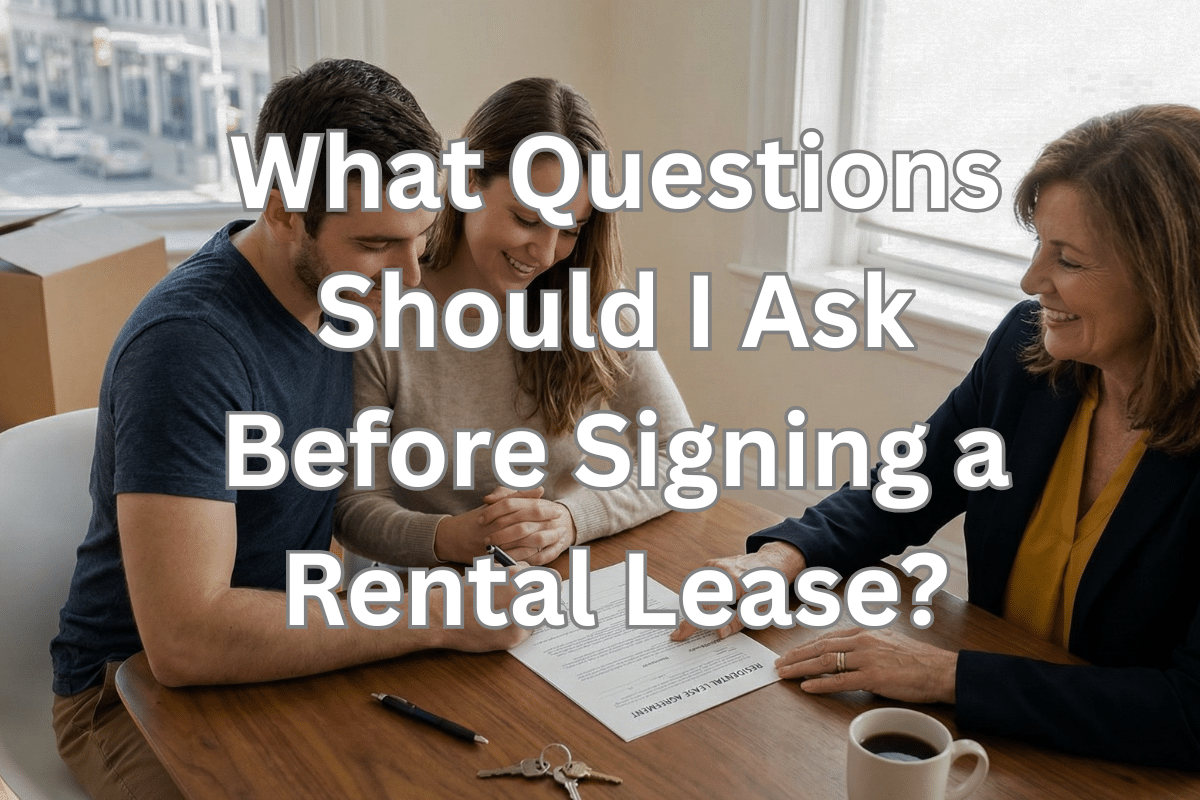
Signing a lease is a significant commitment, whether you’re renting an apartment, a house, or any other type of property.
A lease is a legally binding agreement that outlines the terms and conditions of your tenancy, so it’s crucial to fully understand what you’re agreeing to before you sign on the dotted line. Asking the right questions can help you avoid unexpected surprises, ensure you’re getting a fair deal, and make your rental experience as smooth as possible.
Table of Contents
- 20 Questions To Ask Before Signing A Rental Lease
- 1. What is the total cost of rent, and what is included?
- 2. What is the length of the lease?
- 3. What is the security deposit, and when will it be returned?
- 4. What is the pet policy?
- 5. Who is responsible for maintenance and repairs?
- 6. What are the rules for making changes to the property?
- 7. What is the guest policy?
- 8. What are the rules about subletting?
- 9. What happens if I miss a rent payment?
- 10. What are the parking arrangements?
- 11. Are there any restrictions on use of the property?
- 12. Is renters’ insurance required?
- 13. Are there any penalties for breaking the lease?
- 14. What is the process for renewing the lease?
- 15. What amenities are included?
- 16. What security features are in place?
- 17. What are the move-in and move-out procedures?
- 18. Are there any ongoing property issues?
- 19. What happens if the landlord decides to sell the property?
- 20. Can I get everything in writing?
- Deep Dive Podcast
- Related Questions
20 Questions To Ask Before Signing A Rental Lease
In this blog post, we’ll cover the most important questions you should ask before signing a lease. These questions will help you understand the terms of the lease, clarify your responsibilities as a tenant, and ensure that the property meets your needs.
1. What is the total cost of rent, and what is included?
The rent amount is the first thing most people look at when considering a rental property, but there’s more to the cost than just the base rent. Here are some follow-up questions to ask:
- Is the rent amount fixed, or can it increase during the lease term? Some leases allow landlords to increase the rent after a certain period, even during a fixed-term lease.
- What utilities are included in the rent? Utilities such as water, gas, electricity, and internet may or may not be included. Knowing what you’ll be responsible for paying can help you budget more accurately.
- Are there any additional fees? Some landlords charge extra for amenities like parking, storage, or access to shared facilities such as gyms or pools. Be sure to ask about any hidden costs.

2. What is the length of the lease?
Leases can vary in length, typically ranging from month-to-month agreements to year-long contracts. Understanding the lease term is essential to planning your future. Ask these related questions to clarify:
- Can I break the lease early if needed? What are the penalties? Life is unpredictable, and you may need to move before your lease ends. Understanding the consequences of breaking the lease is critical.
- What happens when the lease ends? Will the lease automatically renew, or will it convert to a month-to-month agreement? If it renews, will the rent increase, and by how much?
3. What is the security deposit, and when will it be returned?
A security deposit is a standard requirement when renting a property, but the terms around it can vary. Make sure you ask:
- How much is the security deposit? This is typically one or two months’ rent but can vary by location and landlord.
- What are the conditions for getting my deposit back? Landlords often require the property to be in the same condition as when you moved in, minus normal wear and tear. Ask for specific details about what constitutes “normal wear and tear” and what might result in deductions.
- How long after I move out will I get my deposit back? Many states have laws requiring landlords to return security deposits within a specific timeframe, often 30 days.

4. What is the pet policy?
If you have a pet or plan to get one, it’s essential to understand the landlord’s pet policy. Questions to ask include:
- Are pets allowed? Some properties have strict no-pet policies, while others may allow pets with restrictions.
- Is there a pet deposit or monthly pet rent? Many landlords charge additional fees for tenants with pets. Make sure you know how much these fees will be.
- Are there any breed or size restrictions? Some landlords only allow certain types of pets or restrict breeds of dogs.
5. Who is responsible for maintenance and repairs?
Understanding who is responsible for maintenance and repairs can save you from unexpected expenses and headaches. Ask:
- Who do I contact for maintenance requests? Is there an on-site property manager or a specific process for reporting issues?
- How quickly are repairs typically addressed? Ask about the average response time for non-emergency and emergency repairs.
- Am I responsible for any repairs or upkeep? Some leases require tenants to handle minor repairs, such as replacing light bulbs or maintaining the yard.
6. What are the rules for making changes to the property?
If you’re planning to personalize your living space, you’ll need to know the rules about making changes. Questions to ask include:
- Can I paint the walls or hang pictures? Many leases have restrictions on altering the property, and failing to follow these rules could result in losing your security deposit.
- Are there any rules about installing fixtures or appliances? For example, some landlords may not allow tenants to install their own dishwashers, ceiling fans, or other appliances.

7. What is the guest policy?
If you plan to have friends or family visit frequently, it’s important to understand the landlord’s guest policy. Ask:
- Are there restrictions on overnight guests? Some leases specify how many nights a guest can stay before they are considered an occupant.
- Do I need to inform the landlord about long-term visitors? Some landlords require tenants to notify them if someone will be staying for an extended period.
8. What are the rules about subletting?
Life changes, and you may need to move out temporarily or permanently before your lease ends. Subletting can be a solution, but not all landlords allow it. Ask:
- Am I allowed to sublet the property? If so, what is the process for doing so?
- Are there any fees or additional requirements for subletting? Some landlords charge a fee or require approval before you can sublet.
9. What happens if I miss a rent payment?
While no one plans to miss rent, it’s important to know the consequences just in case. Ask:
- Is there a grace period for late rent payments? Many landlords provide a few extra days before charging a late fee.
- What are the late fees, and how are they calculated? Late fees can add up quickly, so it’s important to know what to expect.
- Could missing a payment result in eviction? Understanding the landlord’s eviction policy can help you avoid worst-case scenarios.
10. What are the parking arrangements?
Parking can be a significant concern, especially in urban areas. Clarify the parking situation by asking:
- Is parking included in the rent? If not, how much does it cost?
- Is parking assigned, or is it first-come, first-served?
- Are there guest parking spaces available? If you plan to have visitors, it’s important to know where they can park.
11. Are there any restrictions on use of the property?
Some leases come with specific rules about how you can use the property. Ask:
- Are there quiet hours? Many properties have designated quiet hours to ensure a peaceful environment for all tenants.
- Are there restrictions on smoking? Some properties are completely smoke-free, both indoors and outdoors.
- Can I run a business from the property? If you work from home or run a small business, make sure this is allowed under the lease.

12. Is renters’ insurance required?
Renters’ insurance provides coverage for your personal belongings and liability protection. Many landlords require tenants to have it. Ask:
- Is renters’ insurance mandatory? If so, what level of coverage is required?
- Can you recommend a renters’ insurance provider? While you’re not obligated to use the landlord’s recommendation, it can be a helpful starting point.
13. Are there any penalties for breaking the lease?
If you need to move out before your lease ends, it’s important to know what penalties you might face. Ask:
- What is the process for breaking the lease?
- Are there any fees or penalties for breaking the lease?
- Can I find a replacement tenant to avoid penalties?
14. What is the process for renewing the lease?
If you’re planning to stay long-term, understanding the renewal process is key. Ask:
- How far in advance do I need to notify you if I want to renew?
- Will the rent increase upon renewal? If so, by how much?
- Are there any changes to the lease terms upon renewal?
15. What amenities are included?
Many rental properties offer amenities such as gyms, pools, or laundry facilities. Make sure you know what’s included by asking:
- What amenities are available to tenants?
- Are there any additional fees for using the amenities?
- What are the rules for using shared spaces?
16. What security features are in place?
Your safety and security are paramount when choosing a rental property. Ask:
- Are there security cameras or patrols?
- How secure are the locks and windows?
- Are there any safety concerns in the neighborhood?

17. What are the move-in and move-out procedures?
Moving in and out of a rental property can be stressful, so it’s important to understand the process. Ask:
- What is the move-in process? Will the property be cleaned and inspected before I move in?
- What is the move-out process? Are there specific cleaning requirements or checklists to follow?
- Can I be present during the move-out inspection? Being there can help you address any issues on the spot and ensure you get your security deposit back.
18. Are there any ongoing property issues?
Before signing a lease, it’s important to know if there are any existing problems with the property. Ask:
- Are there any ongoing maintenance issues I should know about?
- Has the property had any pest problems? If so, how were they addressed?
- Are there any noise issues, such as loud neighbors or nearby construction?
19. What happens if the landlord decides to sell the property?
If the property is sold during your lease term, it could impact your tenancy. Ask:
- What happens if the property is sold while I’m living here?
- Will my lease still be valid if the property changes ownership?
20. Can I get everything in writing?
Finally, it’s crucial to ensure that all agreements and promises are documented in writing. Verbal agreements won’t hold up in court if a dispute arises. Confirm:
- Can I get a copy of the lease to review before signing?
- Will any special agreements (e.g., waived fees, repairs) be added to the lease?
Asking the right questions before signing a lease can save you from potential headaches and ensure you’re making an informed decision. A lease is more than just a piece of paper—it’s a binding contract that affects your finances, your living situation, and your overall quality of life. By clarifying the terms and understanding your responsibilities as a tenant, you’ll be better equipped to enjoy your new home with peace of mind.
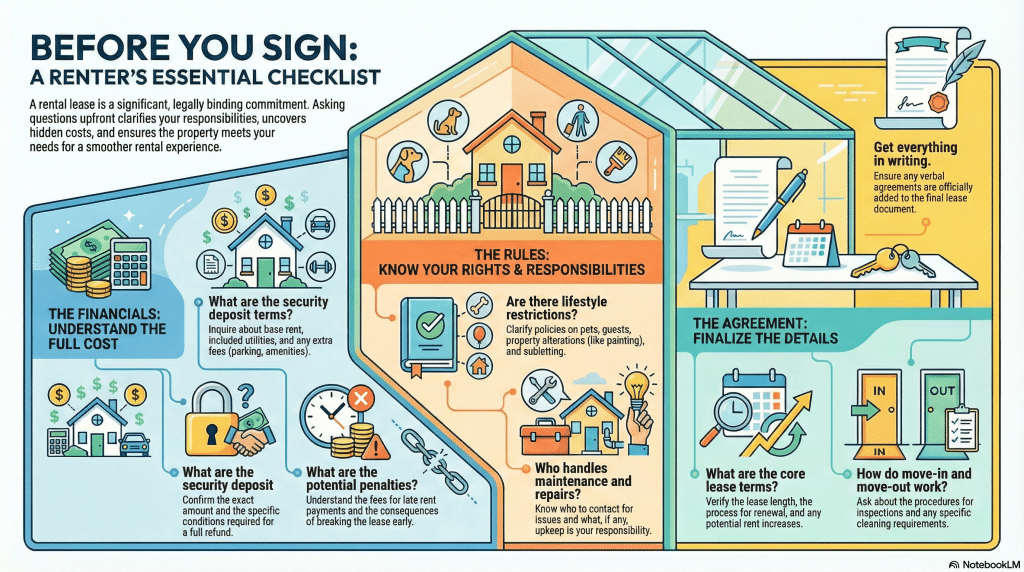
Before you sign, take your time to read the lease thoroughly, ask questions, and seek clarification on anything that seems unclear. If necessary, consult a lawyer or trusted advisor to review the lease with you. Remember, it’s always better to ask questions upfront than to face unexpected challenges later.
By taking these steps, you’ll be well on your way to finding the perfect rental property and ensuring a positive rental experience. Happy house hunting!
Deep Dive Podcast
Listen to our Deep Dive Podcast.
Real Estate Crunch gives you real property and real estate information and advice. We offer a free monthly newsletter; you can sign up for our newsletter by clicking here.
We also have a weekly podcast called “Real Estate Crunch,” found on all major podcast platforms. Listen to our podcast by clicking here.
Follow us on our social media platforms – Facebook and Instagram.
Related Questions
Why Is Real Estate Called ‘Real Estate’?
Real Estate is one of those series of words that many of us use daily. We may not realize the history and story behind why real estate is called “real estate.”
The word Real Estate comes from the Latin word realis, but it refers ideally to the physical and economic characteristics of real estate or real property. The word Real Estate can date back to the 17th Century. Today, Real Estate is a legal term used in many English-speaking jurisdictions worldwide.
By clicking here, you can read more about Why Is Real Estate Called ‘Real Estate’?
What Is A Life Estate? Real Estate Explained
A life estate is when a person is granted the right to use the property for the term of their life. Once the life estate holder dies, the property is passed on to the owner. The individual who holds the life estate does have rights to the property and can usually still get income from the property for the term of their life.
By clicking here, you can read more about What Is A Life Estate? Real Estate Explained.
What Is A Proof Of The Ownership Of A House?
Buying and selling real estate can be a highly complex matter. There are many types of documents that you need to know about.
The deed is the proof of ownership of the house or land. The deed is a legal instrument that shows who owns the home and land. There are many kinds of deeds, from the warranty deed, special warrant, bargain and sale deed, and quitclaim deed. Even though they have some similarities, these deeds also have many differences.
By clicking here, you can read more about What Is A Proof Of The Ownership Of A House?