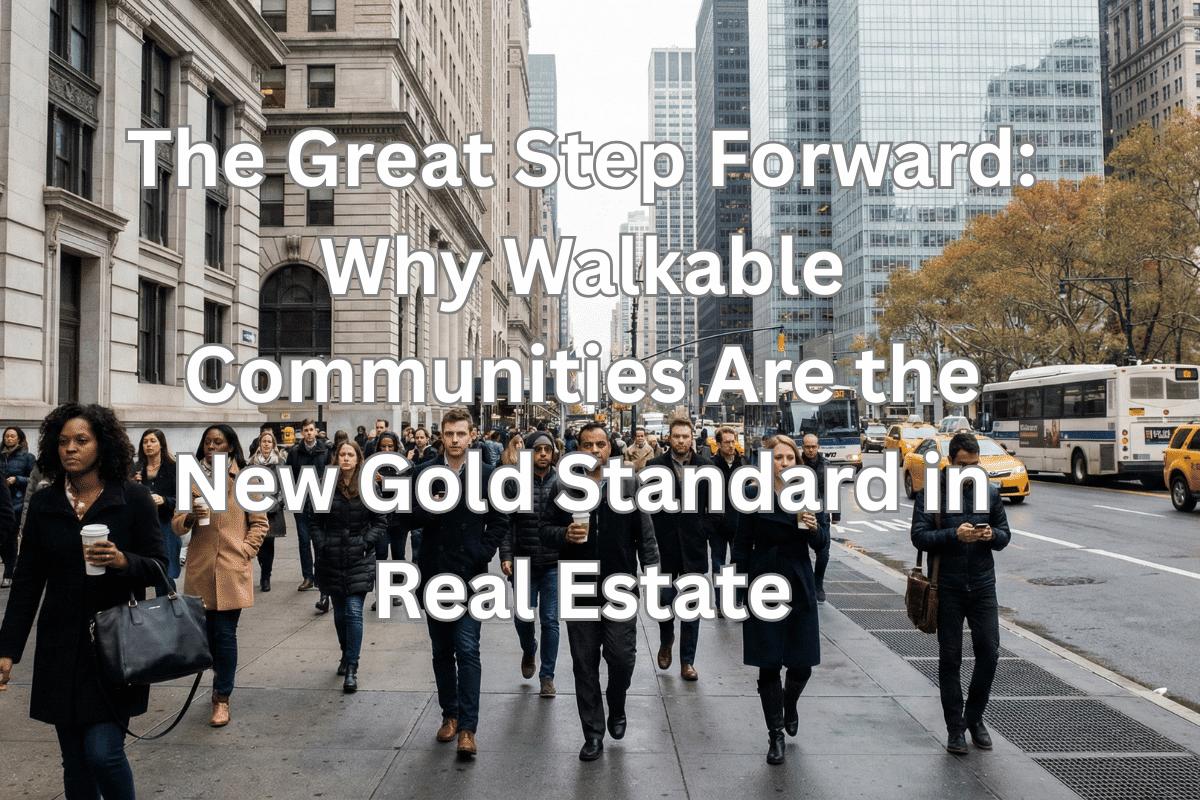
For the better part of seventy years, the dominant narrative of the North American dream was paved with asphalt. Success meant a sprawling house in the suburbs, a two-car garage, and a quiet cul-de-sac reachable only by driving. The automobile was synonymous with freedom, and real estate development reflected that, pushing outwards into sprawling, car-dependent communities.
But the tide is turning. A profound shift is occurring in how people define “the good life,” and consequently, what they look for in a home. The real estate market is seeing a surge in demand for a different kind of freedom: the freedom from the car.
Table of Contents
- My Personal Hunt: Escaping the Car Trap
- The Economic Argument: Your Wallet Loves Walkability
- The Quality of Life: Health and Connection
- The Drivers of Change: Who Wants This?
- The Post-Pandemic Shift and Urban Planning
- A Permanent Shift Ahead
- Deep Dive Podcast
- Related Questions
The rise of walkable communities—neighborhoods where amenities, workplaces, and leisure activities are accessible on foot or via efficient public transit—is no longer a niche trend for hipsters or urbanites. It is becoming a dominant force shaping real estate values, urban planning, and lifestyle choices across generations.
This isn’t just about having a sidewalk in front of your house. It’s about the ability to live a complete life without needing to turn an ignition key for every single task.
My Personal Hunt: Escaping the Car Trap
I am currently living this trend in real time. Lately, I’ve been immersed in the often-stressful world of apartment hunting. As I scroll through listings and map out potential neighborhoods, I’ve realized my criteria have changed drastically from what they might have been ten years ago.
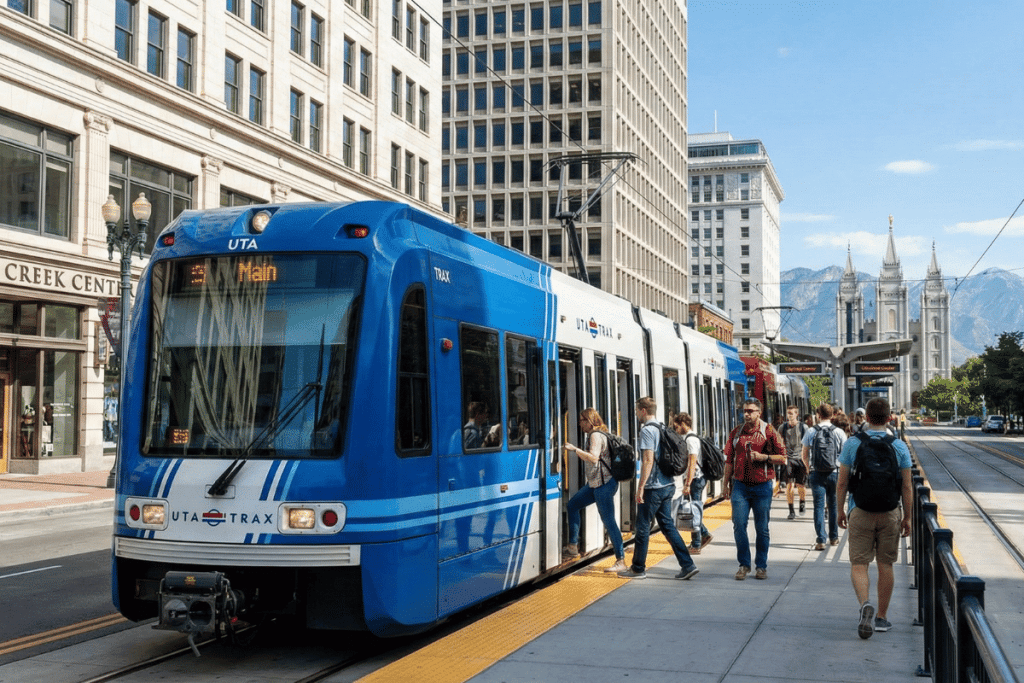
Square footage is nice, and stainless steel appliances are a bonus, but my non-negotiables are now entirely focused on location efficiency. My primary filter isn’t “does it have a pool?” but rather, “How close is the nearest light rail or bus line?” and “What is the Walk Score?”
I have lived in areas where running out for a carton of milk required a 20-minute round-trip drive. I’m done with that life. I am looking for a place where my daily existence—getting coffee, picking up groceries, heading to a coworking space, or meeting friends for dinner—can be accomplished on two feet or via public transit.
It’s about reclaiming time. The hours spent staring at the bumper in front of me during a commute are hours lost forever. I want to trade that time for reading on a train or getting incidental exercise walking to the store.
Now, I’m not anti-car. I may eventually buy one for weekend escapes or specific trips. But I absolutely refuse to be car-dependent every single day. If a destination is just slightly too far to walk, I want options that still don’t require owning a vehicle. I want to live where hopping on a Vespa scooter for a quick errand is feasible and safe, or where grabbing an Uber or Lyft takes two minutes because the area is dense and active.
I am not alone in this desire. In talking to leasing agents and other prospective renters, the refrain is constant: people are exhausted by the costs and burdens of daily driving. They are actively seeking out hubs of connectivity.
The Economic Argument: Your Wallet Loves Walkability
While the lifestyle benefits are major draws, the economic realities driving this trend are undeniable. The shift toward walkable real estate is, for many, a financial necessity that has turned into a preference.
The High Cost of Dependence
For decades, we have underestimated the true cost of the suburban lifestyle. We looked at the cheaper mortgage payment on the outskirts of town but ignored the transportation ledger. According to the Bureau of Transportation Statistics, transportation is typically the second-largest household expense after housing itself.
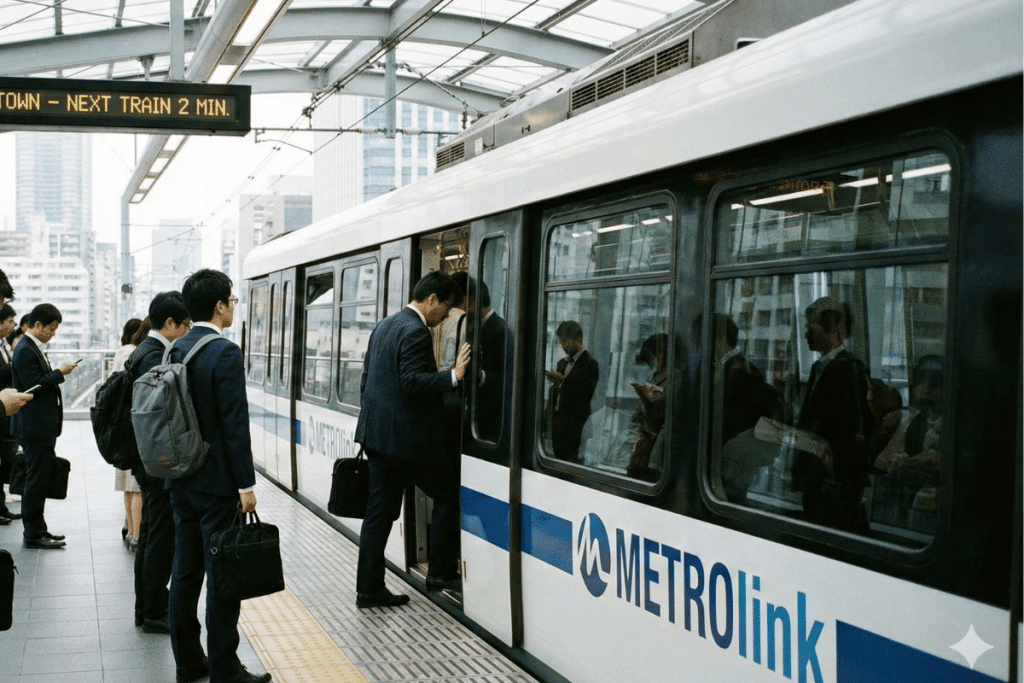
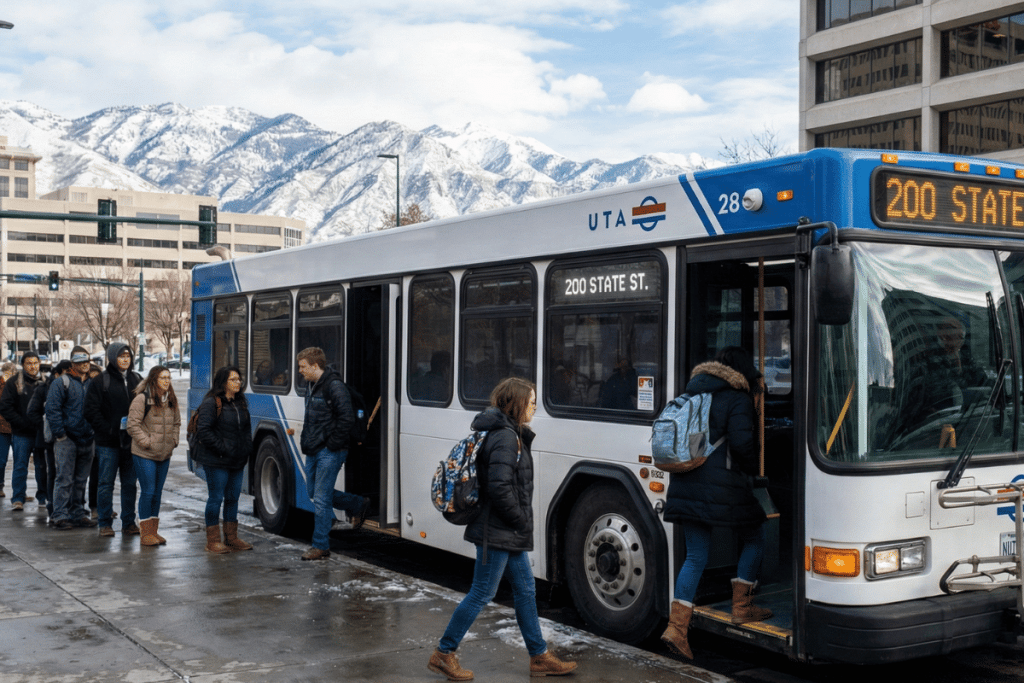
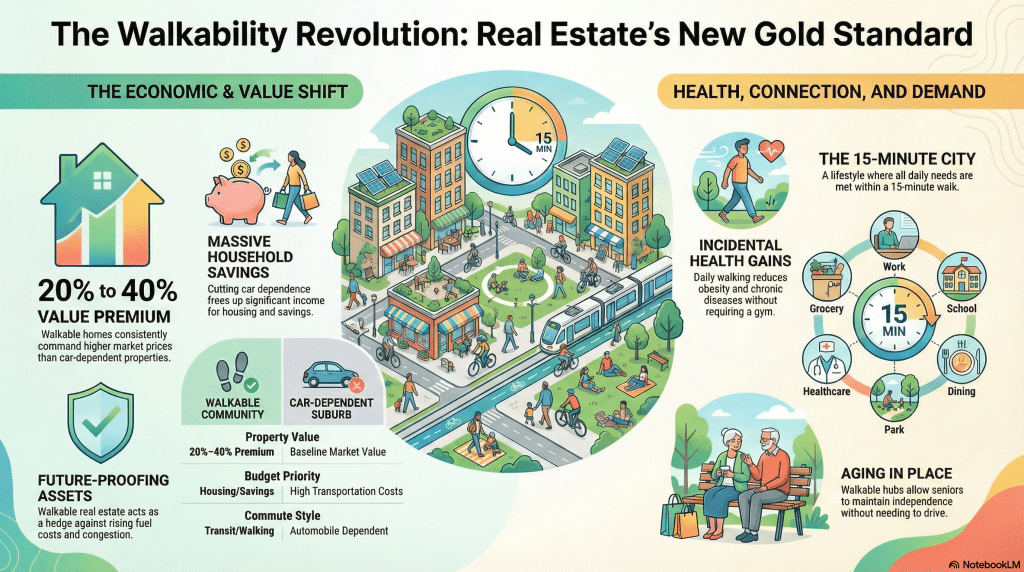
When you factor in car payments, insurance, fluctuating fuel prices, maintenance, and parking, owning two cars per household is a massive financial drain. By moving to a transit-accessible, walkable community, a household can often downsize to one car—or go car-free entirely—freeing up hundreds, sometimes thousands, of dollars a month. That is money that can be redirected toward savings, experiences, or affording a nicer home in a better location.
The “Walkability Premium” in Real Estate
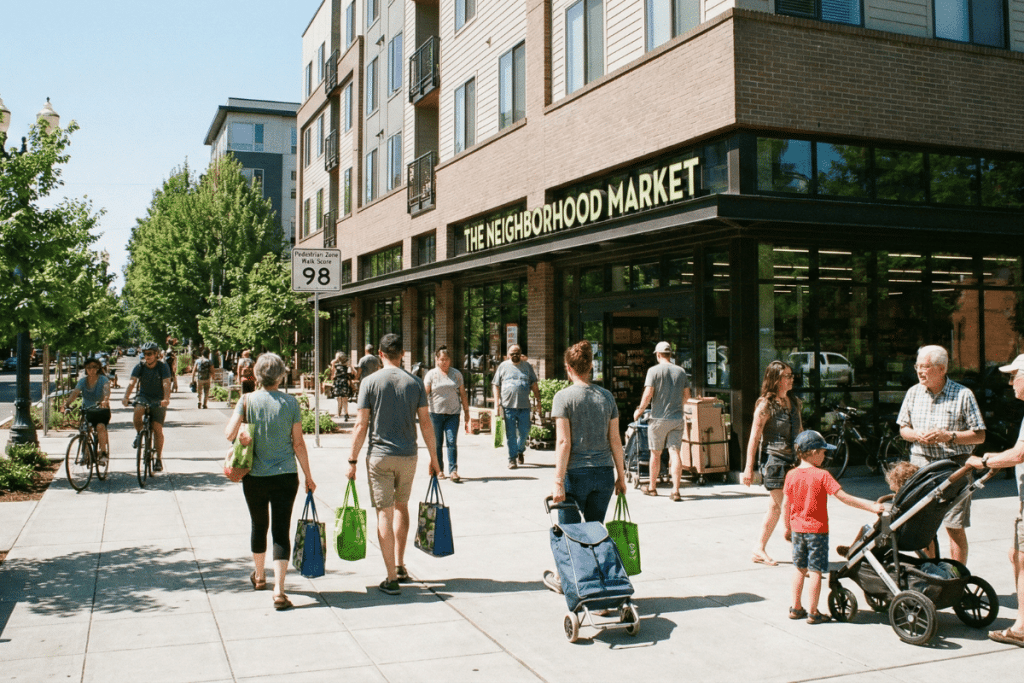
Real estate investors and homeowners are taking note of this shift. Walkability pays. Properties in neighborhoods with high Walk Scores consistently command higher market values than comparable properties in car-dependent areas.
Studies have shown that homes in highly walkable areas can sell for premiums ranging from 20% to over 40% compared to similar homes in areas requiring a car for every errand. Walkability acts as a form of future-proofing for an asset. As cities become more congested and gas prices remain volatile, the value of being able to opt out of traffic will only increase.
The Quality of Life: Health and Connection
Beyond the dollars and cents, the drive toward walkable communities is rooted in a desire for a healthier, more connected existence. The design of our neighborhoods has a direct impact on our physical and mental well-being.
Designing for Health
The sedentary lifestyle epidemic is closely linked to car-dependent urban sprawl. When you live in a walkable community, physical activity ceases to be a chore you have to schedule at the gym; it becomes an incidental part of your day. Walking to the bus stop, carrying groceries home three blocks, or biking to a friend’s apartment adds up. Residents in walkable neighborhoods generally have lower rates of obesity and chronic diseases associated with inactivity.
Combating Isolation
Perhaps the most profound benefit is social. Car-centric environments are inherently isolating; we move through our communities encased in steel and glass bubbles. Walkable neighborhoods, by contrast, are designed for human-scaled interaction.
When you are on foot, you bump into neighbors. You get to know the local barista. You recognize the people sitting on their front porches. These “weak-tie” interactions are crucial for a sense of belonging and community. Walkable streets foster a vibrant public realm that feels safer and more inviting because there are “eyes on the street.”
The Drivers of Change: Who Wants This?
This trend isn’t being driven by a single group; it’s a convergence of demographic shifts and changing societal values.
The Power of Millennials and Gen Z
Millennials, now the largest segment of the home-buying market, have long shown a preference for urban amenities over massive suburban square footage. They prioritize experiences over owning “stuff,” and a car is often seen as a burdensome expense rather than a status symbol.
Gen Z is doubling down on this trend. Many in this generation are delaying getting their driver’s licenses entirely. They are digital natives who view mobility as a service (Uber, Lyft, scooter shares, transit apps) rather than a possession. They are also deeply concerned about climate change, viewing car-free or car-light living as an environmental imperative.
Aging in Place
At the other end of the spectrum, Baby Boomers are looking to downsize. The large suburban home with the big yard to maintain becomes a burden as people age. Furthermore, as driving becomes difficult or impossible due to age, living in a car-dependent suburb can lead to profound isolation and a loss of independence. Walkable, transit-rich communities allow older adults to “age in place,” maintaining their ability to access doctors, grocery stores, and social centers without relying on others for rides.
The Post-Pandemic Shift and Urban Planning
The COVID-19 pandemic acted as an accelerant for many existing real estate trends, including walkability.
The Work-From-Home Effect
When the daily commute to a downtown office was removed for millions of workers, the relationship with the home neighborhood changed. If you are working from home, your immediate surroundings matter immensely.
People realized they didn’t want to spend their entire day trapped in a house in a residential-only zone. They wanted to be able to step out for a coffee break, walk to a park for lunch, or meet a colleague at a local co-working spot. The rise of remote and hybrid work has increased the demand for neighborhoods that offer a mix of uses close to home.
The “15-Minute City”
This has popularized the urban planning concept of the “15-Minute City”—an ideal where residents can access most of their daily needs (work, food, health, education, and leisure) within a 15-minute walk or bike ride from their front door. While sometimes controversial in political discourse, as a real estate preference, it is undeniable. People want convenience, and they are willing to pay for it.
Transit-Oriented Development (TOD)
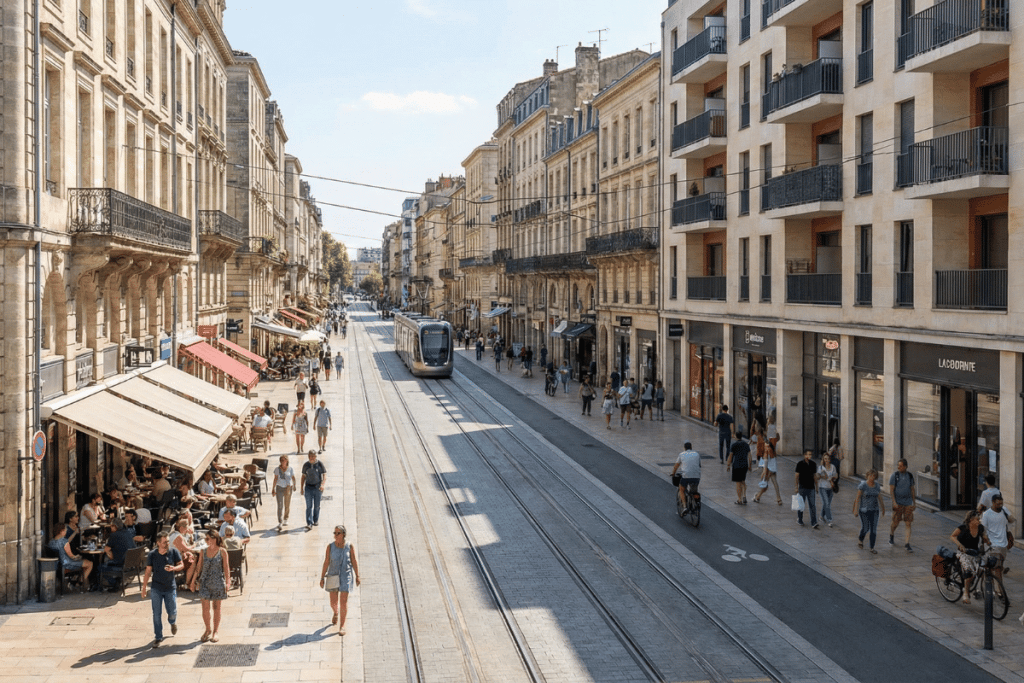
Developers and city planners are responding to this demand through Transit-Oriented Development (TOD). This strategy involves maximizing residential, business, and leisure space within walking distance of public transport.
We are seeing old strip malls being razed and replaced with mixed-use centers featuring apartments over ground-floor retail, all centered around a light rail station or rapid bus hub. These developments are highly sought after because they offer the “best of both worlds”: the density and convenience of city living without necessarily being in the downtown core.
A Permanent Shift Ahead
The resurgence of walkable communities is not a fleeting real estate fad. It is a rational market correction to decades of over-building for automobiles at the expense of human experience.
As I continue my apartment search, I know that by prioritizing transit access and walkability, I’m not just making a lifestyle choice for today; I’m making a sound investment in my future happiness and financial stability. The real estate mantra used to be “location, location, location.” Today, that translates to “connection, convenience, and community.” The future of real estate is on foot.
Deep Dive Podcast
Check out our Deep Dive Podcast.
Real Estate Crunch gives you real property and real estate information and advice. We offer a free monthly newsletter; you can sign up for our newsletter by clicking here.
Subscribe to our Youtube Channel – Real Estate Crunch – by clicking here.
We also have a weekly podcast called “Real Estate Crunch or Deep Dive By Real Estate Crunch,” found on all major podcast platforms. Listen to our podcast by clicking here.
Follow us on our social media platforms – Facebook and Instagram.
Related Questions
Should You Hire a Real Estate Agent or Buy/Sell on Your Own?
Buying or selling a home is one of the most significant financial transactions people will ever make.
With such high stakes, it’s natural to wonder whether you should hire a real estate agent or handle the process independently. While some buyers and sellers successfully go the DIY route, others find that hiring an agent makes the process smoother and more efficient. Read on as we will explore the pros and cons of using a real estate agent versus a DIY approach, helping you determine which option is best for your situation.
By clicking here, you can read more about Should You Hire a Real Estate Agent or Buy/Sell on Your Own?
Top 15 Mistakes Home Sellers Make and How to Avoid Them
Selling a home can be a complex and emotional process. For most people, selling their home is one of their most significant and complex undertakings.
While the ultimate goal of most home sellers is to sell quickly and at a reasonable price, inevitable mistakes can lead to delays, reduced offers, or even a failed sale. Read on as we will highlight the top 15 mistakes home sellers make and provide actionable advice on how to avoid them.
By clicking here, you can read more about Top 15 Mistakes Home Sellers Make and How to Avoid Them.
How to Stage Your Home to Sell Faster and for a Higher Price
Selling a home can be both an exciting and challenging process. Home staging is one of the most effective strategies to ensure a quick sale and maximize your property’s value.
By thoughtfully preparing your home to appeal to the broadest range of buyers, you can create a memorable first impression that attracts attention and encourages higher offers. In this blog post, we’ll explore what home staging is and why it’s essential and offer actionable tips for staging every key area of your home to help you achieve a successful sale.
By clicking here, you can read more about How to Stage Your Home to Sell Faster and for a Higher Price.

Leave a Reply
You must be logged in to post a comment.