In the era of highly produced virtual tours and curated listing sites, the truth about a rental property is rarely found on its homepage. My recent search in Salt Lake City taught me that the most valuable tool for a renter isn’t Zillow—it’s a healthy dose of skepticism and Google Street View.
There is a specific kind of dopamine hit that comes with modern rental hunting. You sit on your couch, scroll through endless pages of beautifully photographed apartments, and start mentally moving in. You see the quartz countertops, the impossibly blue swimming pools, the staged living rooms with mid-century modern furniture, and you think: This is it. This is the upgrade I deserve.
Table of Contents
- Virtual Vetting: The Google Maps Trick That Saved Me From a Rental Nightmare
- The Curated Reality vs. The Gritty Truth
- The Importance of Independent Verification
- Deep Dive Podcast
- Related Questions

Virtual Vetting: The Google Maps Trick That Saved Me From a Rental Nightmare
We are living through a real estate crunch where buying is out of reach for many, making the rental market fiercely competitive and increasingly expensive. When you are committing to paying thousands of dollars a month in rent, you want to believe that what you see online is what you get in reality.
I wanted to believe it, too.
Recently, I began the arduous process of looking for a new rental property in the Salt Lake City, Utah area. I was excited. SLC is a fantastic city with booming tech, incredible outdoor access, and a vibrant culture. I had my budget set, my “must-haves” listed, and I dove headfirst into the major apartment listing websites.
On the surface, it looked promising. I found dozens of buildings labeled “luxury” or “premier living.” The photos were stunning.
The on-site reviews—the ones curated by the management companies on their own websites—were glowing. They featured generic avatars with five-star ratings saying things like, “Best management team ever!” and “Love the amenities!”
I had a shortlist of five properties that looked, for all intents and purposes, perfect. I was ready to start scheduling tours. But then, almost as an afterthought, I decided to do one extra step of due diligence.
I copied the address of my top-choice building and pasted it into Google Maps.
That simple action pulled back the curtain on a reality I wasn’t prepared for. It was like stepping out of a meticulously crafted movie set and into a gritty documentary. The difference between the glossy marketing and the on-the-ground truth wasn’t just disappointing; it was genuinely scary.
If you are currently looking for a rental property, whether in Salt Lake City or anywhere else, this is my cautionary tale. You cannot depend on an apartment complex to tell you the truth about itself.

The Curated Reality vs. The Gritty Truth
We have to understand the business model of rental listings. The photos you see on Apartments.com, Zillow, or the building’s own website are advertising. They are marketing materials designed to sell a product.
The photos are taken with wide-angle lenses to make rooms look bigger. They are shot on the sunniest day of the year. They show you the newly renovated lobby, but not the trash chute on the 4th floor that hasn’t been cleaned in a month. The “testimonials” on their sites are often cherry-picked, incentivized, or sometimes, outright fabrications.
When I started my search in SLC, I fell for the marketing hook, line, and sinker. The buildings looked pristine. They touted “secure access,” “resort-style living,” and “gourmet kitchens.”
However, when I switched over to Google Maps and started reading the unfiltered Google Reviews—the ones the management companies can’t easily delete—the facade crumbled.
I wasn’t just seeing complaints about a slow elevator or a rude leasing agent on a bad day. I was reading consistent, terrifying patterns of neglect and danger in buildings that were charging premium prices.

The Salt Lake City Wake-Up Call
I want to be specific about what I found, because these weren’t vague complaints. These were detailed accounts from current and recent residents who were desperate to warn others.
One building, which featured sparkling photos of a rooftop lounge on its website, had a Google review section that read like a horror script. Multiple reviews, posted months apart by different people, detailed severe infestations.
We aren’t talking about a stray spider here or there. People were reporting German cockroaches taking over their kitchens despite repeated requests for pest control. Even worse, several reviews mentioned rats. Not mice—rats.
One review detailed hearing them in the walls at night; another mentioned seeing them near the complex’s dumpster area, which was apparently rarely secured.
How does a “luxury” building with granite countertops have a rat problem? Because marketing budgets rarely overlap with maintenance budgets.
But the pest issues, gross as they were, paled in comparison to the security concerns.
When “Secure Access” Is a Lie
Almost every modern building touts “secure, key-fob access.” It’s a major selling point, especially for people moving to a new city or those living alone.
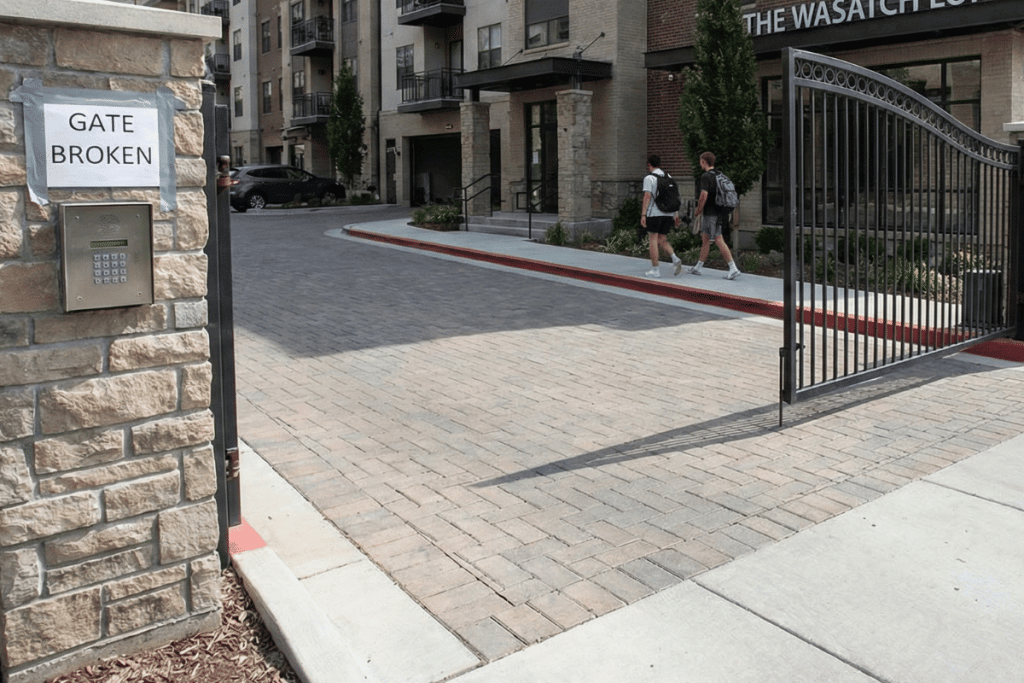
Yet, the reviews for several SLC properties on my shortlist told a different story. Residents complained that main entry doors had broken locks that remained unfixed for weeks, allowing anyone to walk in off the street. Garage gates were frequently stuck open, leading to car break-ins.
This brings me to the most difficult part of this reality check: the intersection of the socio-economic crisis and rental safety.
Salt Lake City, like almost every major metropolitan area in America right now, is grappling with a significant homelessness crisis. This is a deeply complex human tragedy, and I feel immense empathy for those struggling without shelter.
However, as a renter looking for a safe place to live, you have to deal with the reality of the immediate environment. You have a right to know if the “secure” building you are about to pay thousands of dollars for is actually secure.
The Google reviews for one highly touted downtown building were shocking. Residents detailed non-residents sleeping in the stairwells and hallways on a regular basis because security doors were broken.
One review that has stuck with me—and frankly, horrified me—described an incident where a transient individual gained access to the building’s “resident-only” community room and was found using the microwave and communal area as a toilet.
Another review for a different property mentioned the daily hazard of walking dogs. The tenant stated that they couldn’t take their dog out to pee at night because the periphery of the building was littered with used drug needles and broken glass, and they didn’t feel safe walking alone after dark due to aggressive encounters near the building entrance.
These are not things a leasing agent will ever tell you on a tour. They will show you the shiny gym and the model unit with the nice view. They will not tell you that you might need to dodge biohazards on your way to work.
The Importance of Independent Verification
The lesson I learned in Salt Lake City is that the rental market is currently a minefield of misinformation. Management companies are under immense pressure to fill units in a volatile economy, and they are prioritizing digital curb appeal over tenant reality.
If I had just rented one of those places based on the photos and the website reviews, I would have been locked into a 12-month lease in a living nightmare.
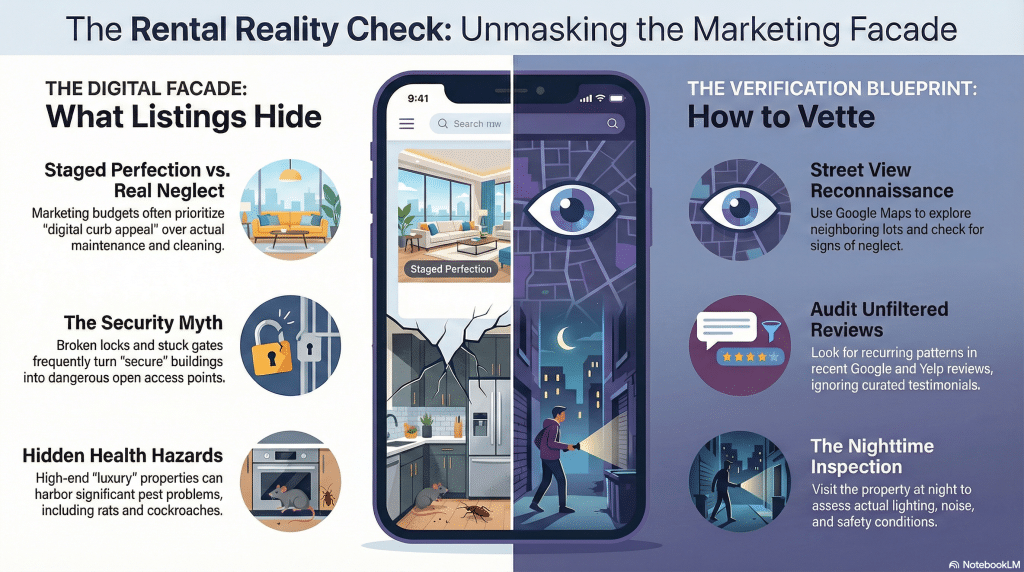
So, how do you protect yourself? You have to stop trusting the listing and start investigating the property. Here is the due diligence checklist that saved me in SLC:
1. The Google Maps Deep Dive
Don’t just look at the pin on the map. Go into Street View. “Walk” around the block virtually.
What do the neighboring properties look like? Is there graffiti on the side of the building that isn’t in the marketing photos? Is the beautiful park next door actually a poorly lit, abandoned lot?
2. Read the Right Reviews
Ignore the testimonials on the apartment’s own website. Ignore reviews on sites that seem heavily gamified. Go straight to Google Reviews and Yelp.
- Sort by “Newest”: A building might have a 4-star average because it was great three years ago, but new management might have run it into the ground in the last six months.
- Look for Patterns: One angry review about a noisy neighbor is an outlier. Ten reviews mentioning cockroaches over a six-month period is a fact pattern.
- Read the Management Responses: Do they defensively argue with tenants in the reviews, or do they offer constructive solutions? A combative management team online will be combative in person.
3. The Crime Map Check
Almost every city has public-facing crime mapping software (like SpotCrime or city-data.com). Plug in the address. Look at the last 90 days.
Are there a high number of vehicle break-ins, assaults, or burglaries in the immediate vicinity? “Up-and-coming neighborhood” in a listing description sometimes translates to “currently unsafe” on a crime map.
4. The Drive-By (The Ultimate Vetting Tool)
If you are in the same city, drive to the property before you ever schedule a tour.
- Go during the day: How does the exterior maintenance look? Are the dumpsters overflowing?
- Go at night (Crucial): This is the real test. How is the lighting? Do you feel safe parking your car on the street? Is there a lot of loitering around the entrance? If you wouldn’t feel comfortable walking from your car to the front door at 10 PM on a Tuesday, do not rent there.
The real estate crunch puts renters at a disadvantage. Inventory is tight, prices are high, and the pressure to sign a lease quickly is immense. But this pressure is exactly why you must be more vigilant than ever.
A rental property is more than just a monthly payment; it’s your sanctuary. It’s where you sleep, where you keep your valuables, and where you should feel safe closing your eyes at night.
My search in Salt Lake City was a sobering reminder that the digital facade of the rental market is often a miles-deep filter designed to hide ugly truths. The rats, the broken security, and the unsafe environments are real, even if they don’t show up in the virtual tour.
Don’t depend on the apartment to be honest with you. Their job is to get you to sign a contract. Your job is to ensure you aren’t signing away your peace of mind. Read the bad reviews, check the maps, and trust your gut over their glossy photos.
Deep Dive Podcast
Check out our Deep Dive Podcast.
Real Estate Crunch gives you real property and real estate information and advice. We offer a free monthly newsletter; you can sign up for our newsletter by clicking here.
Subscribe to our Youtube Channel – Real Estate Crunch – by clicking here.
We also have a weekly podcast called “Real Estate Crunch or Deep Dive By Real Estate Crunch,” found on all major podcast platforms. Listen to our podcast by clicking here.
Follow us on our social media platforms – Facebook and Instagram.
Related Questions
Should You Hire a Real Estate Agent or Buy/Sell on Your Own?
Buying or selling a home is one of the most significant financial transactions people will ever make.
With such high stakes, it’s natural to wonder whether you should hire a real estate agent or handle the process independently. While some buyers and sellers successfully go the DIY route, others find that hiring an agent makes the process smoother and more efficient. Read on as we will explore the pros and cons of using a real estate agent versus a DIY approach, helping you determine which option is best for your situation.
By clicking here, you can read more about Should You Hire a Real Estate Agent or Buy/Sell on Your Own?
Top 15 Mistakes Home Sellers Make and How to Avoid Them
Selling a home can be a complex and emotional process. For most people, selling their home is one of their most significant and complex undertakings.
While the ultimate goal of most home sellers is to sell quickly and at a reasonable price, inevitable mistakes can lead to delays, reduced offers, or even a failed sale. Read on as we will highlight the top 15 mistakes home sellers make and provide actionable advice on how to avoid them.
By clicking here, you can read more about Top 15 Mistakes Home Sellers Make and How to Avoid Them.
How to Stage Your Home to Sell Faster and for a Higher Price
Selling a home can be both an exciting and challenging process. Home staging is one of the most effective strategies to ensure a quick sale and maximize your property’s value.
By thoughtfully preparing your home to appeal to the broadest range of buyers, you can create a memorable first impression that attracts attention and encourages higher offers. In this blog post, we’ll explore what home staging is and why it’s essential and offer actionable tips for staging every key area of your home to help you achieve a successful sale.
By clicking here, you can read more about How to Stage Your Home to Sell Faster and for a Higher Price.

Leave a Reply
You must be logged in to post a comment.