
Rent is one of the largest monthly expenses for most people, and with rising housing costs, it’s no wonder renters are looking for ways to save money.
Negotiating rent with a landlord can feel intimidating, but it’s a skill worth developing, as it can save you hundreds or even thousands of dollars over the course of a lease. The good news is that landlords are often open to negotiation, especially if you approach the conversation thoughtfully and strategically.
Table of Contents
- 10 Tips for Negotiating with Your Landlord
- 1. Understand the Rental Market
- 2. Time Your Negotiation Strategically
- 3. Prepare Your Case
- 4. Approach the Conversation Professionally
- 5. Offer Something in Return
- 6. Be Prepared for Rejection
- 7. Consider the Bigger Picture
- 8. Know When to Walk Away
- 9. Negotiating as a Current Tenant
- 10. Finalizing the Agreement
- Deep Dive Podcast
- Related Questions
10 Tips for Negotiating with Your Landlord
Read on as we’ll cover the best ways to negotiate rent with a landlord, from understanding the market to presenting your case effectively. Whether you’re a first-time renter or a seasoned tenant, these tips will help you feel confident and prepared to ask for a better deal.
1. Understand the Rental Market
Before you even think about negotiating rent, it’s important to do your homework. Understanding the local rental market will give you a strong foundation for your negotiation and help you determine whether your request is reasonable.
Research Comparable Rentals
Look at similar properties in your area and compare their rental prices to the one you’re considering. Pay attention to factors like:
- Location
- Size of the property (square footage, number of bedrooms and bathrooms)
- Amenities (parking, laundry, pool, gym, etc.)
- Condition of the property
Websites like Zillow, Apartments.com, or Craigslist can help you find comparable listings. If you notice that similar properties are renting for less than what your landlord is asking, you’ll have a solid argument for why your rent should be reduced.

Consider the Market Conditions
The rental market fluctuates based on supply and demand. If there are many vacant properties in your area, landlords may be more willing to negotiate to avoid losing a tenant. Conversely, if the market is competitive, with high demand and limited supply, it may be harder to negotiate a lower rent.
2. Time Your Negotiation Strategically
Timing can play a significant role in your ability to negotiate rent. Certain times of the year and specific situations can make landlords more open to negotiation.
Negotiate Before Signing the Lease
The best time to negotiate rent is before you sign the lease. Once you’ve signed the agreement, you’re locked into the terms, and it becomes much harder to make changes. If you’re moving into a new place, don’t hesitate to discuss rent before committing.
Leverage the Off-Season
Rental markets tend to slow down during certain times of the year, particularly in the winter months. If you’re apartment hunting during the off-season, landlords may be more willing to negotiate rent to fill vacancies.
Renewing Your Lease
If you’re an existing tenant, the lease renewal period is an excellent time to negotiate rent. Landlords often prefer to keep a reliable tenant rather than go through the hassle and expense of finding a new one. Use this to your advantage and negotiate for a lower rent or at least prevent an increase.

3. Prepare Your Case
When negotiating rent, you need to present a compelling case to your landlord. Here’s how to prepare:
Highlight Your Tenant Value
Landlords value tenants who pay rent on time, take care of the property, and don’t cause issues. If you’re already a tenant, emphasize your positive track record. If you’re a new tenant, highlight your financial stability, steady income, and good rental history.
For example, you could say:
“I’ve always paid my rent on time and kept the property in great condition. I’d love to continue renting here, but I’d like to discuss the possibility of a lower rent.”
Show Evidence of Comparable Rentals
Bring data to back up your request. If you’ve found similar properties in the area with lower rent, share that information with your landlord. Be polite and factual when presenting this evidence.
For example:
“I’ve noticed that similar apartments in the neighborhood are renting for $1,500, while this unit is priced at $1,700. Would you be open to discussing a rent adjustment?”
Know Your Budget
Before negotiating, determine the maximum amount you’re willing to pay. Having a clear budget in mind will help you stay firm during the negotiation and avoid agreeing to terms that strain your finances.
4. Approach the Conversation Professionally
How you approach the negotiation can make a big difference in the outcome. Here are some tips for having a productive and professional conversation:
Be Polite and Respectful
Landlords are more likely to negotiate with tenants who are respectful and professional. Avoid being confrontational or demanding, as this can put the landlord on the defensive.
Instead, frame the conversation as a collaborative discussion. For example:
“I really like this property and would love to make it my home. However, I was wondering if there’s any flexibility on the rent.”
Choose the Right Time
Timing is everything. If possible, schedule a meeting or phone call with your landlord to discuss rent. Avoid bringing up the topic when they’re busy or stressed.
Be Confident but Flexible
Confidence is key when negotiating, but it’s also important to be flexible. If the landlord can’t meet your exact request, consider other compromises, such as reduced rent for signing a longer lease or additional amenities.
5. Offer Something in Return
Negotiation is a two-way street. If you’re asking for a lower rent, consider offering something in return to make the deal more appealing to your landlord.
Sign a Longer Lease
Landlords value stability, so offering to sign a longer lease can be a strong bargaining chip. For example, you could propose signing a two-year lease in exchange for a lower monthly rent.

Pay Rent in Advance
If you’re in a financial position to do so, offering to pay several months’ rent upfront can incentivize your landlord to lower the monthly rate. This gives them immediate cash flow and reduces the risk of missed payments.
Take on Minor Repairs or Maintenance
If you’re handy, you could offer to handle minor repairs or maintenance tasks in exchange for reduced rent. For example, you could offer to take care of landscaping, snow removal, or small repairs around the property.
6. Be Prepared for Rejection
Not all landlords will be open to negotiating rent, and that’s okay. If your landlord declines your request, don’t take it personally. Instead, consider these alternatives:
Negotiate Other Terms
If the landlord won’t budge on rent, see if they’re willing to negotiate other terms of the lease, such as:
- Waiving certain fees (e.g., parking or pet fees)
- Including utilities in the rent
- Offering upgrades, such as new appliances or fresh paint
Revisit the Conversation Later
If the landlord is hesitant to lower the rent now, ask if you can revisit the conversation in a few months. For example, you could propose a temporary rent reduction with the option to renegotiate after six months.
7. Consider the Bigger Picture
While saving money on rent is important, it’s also essential to consider the bigger picture. A slightly higher rent may be worth it if the property meets your needs and the landlord is responsive and reliable.
Factor in the Total Cost
When evaluating the rent, consider the total cost of living in the property, including:
- Utilities
- Parking fees
- Commute costs
- Access to amenities
Sometimes, a higher rent is offset by lower utility costs or other savings.
Weigh the Pros and Cons
If your landlord is unwilling to negotiate, consider whether the property is worth the asking price. If it’s in a great location, has desirable amenities, or offers other benefits, it may still be a good deal.

8. Know When to Walk Away
If the landlord is unwilling to negotiate and the rent is outside your budget, don’t be afraid to walk away. There are plenty of rental options available, and it’s better to find a property that fits your financial situation than to overextend yourself.
9. Negotiating as a Current Tenant
If you’re already renting and want to negotiate your rent, the process is slightly different. Here are some tips:
Start the Conversation Early
If your lease is about to expire, start the negotiation process at least 60-90 days before the renewal date. This gives you and your landlord plenty of time to discuss terms.
Emphasize Your Value as a Tenant
Highlight your positive track record, such as paying rent on time, keeping the property in good condition, and being a respectful neighbor. Landlords are often more willing to negotiate with reliable tenants.
Leverage Market Conditions
If rental prices in your area have decreased or there are many vacant units in your building, use this information to support your case for a rent reduction.
10. Finalizing the Agreement
Once you’ve reached an agreement with your landlord, make sure everything is documented in writing. This protects both you and the landlord and ensures there’s no confusion about the new terms.
Update the Lease
If the rent amount changes, the lease should be updated to reflect the new terms. Both you and the landlord should sign the updated document.
Keep a Copy
Make sure you have a copy of the updated lease or any written agreement for your records. This will be important if any disputes arise in the future.
Negotiating rent with a landlord may seem daunting, but with the right approach, it’s entirely possible to secure a better deal. By understanding the rental market, preparing your case, and approaching the conversation professionally, you can increase your chances of success.
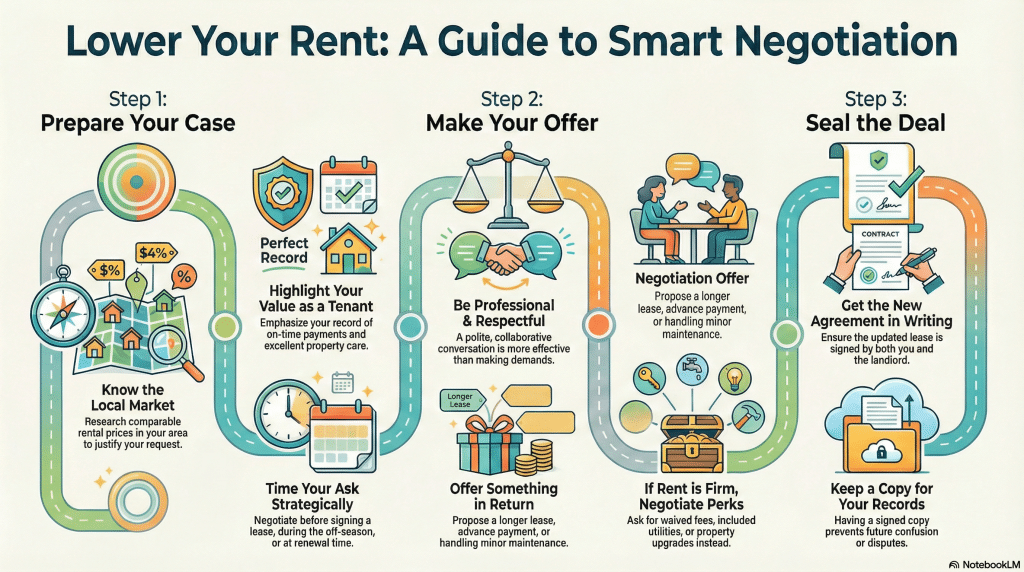
Remember, negotiation is a two-way street. Be prepared to offer something in return, such as signing a longer lease or paying rent upfront, to make the deal more appealing to your landlord. And if the landlord isn’t willing to negotiate, don’t be afraid to explore other options or walk away.
Ultimately, the key to successful rent negotiation is preparation, communication, and confidence. With these tools in hand, you’ll be well-equipped to advocate for yourself and find a rental arrangement that works for your budget and lifestyle.
Deep Dive Podcast
Listen to our Deep Dive Podcast.
Real Estate Crunch gives you real property and real estate information and advice. We offer a free monthly newsletter; you can sign up for our newsletter by clicking here.
Subscribe to our Youtube Channel – Real Estate Crunch – by clicking here.
We also have a weekly podcast called “Real Estate Crunch,” found on all major podcast platforms. Listen to our podcast by clicking here.
Follow us on our social media platforms – Facebook and Instagram.
Related Questions
Should You Hire a Real Estate Agent or Buy/Sell on Your Own?
Buying or selling a home is one of the most significant financial transactions people will ever make.
With such high stakes, it’s natural to wonder whether you should hire a real estate agent or handle the process independently. While some buyers and sellers successfully go the DIY route, others find that hiring an agent makes the process smoother and more efficient. Read on as we will explore the pros and cons of using a real estate agent versus a DIY approach, helping you determine which option is best for your situation.
By clicking here, you can read more about Should You Hire a Real Estate Agent or Buy/Sell on Your Own?
Top 15 Mistakes Home Sellers Make and How to Avoid Them
Selling a home can be a complex and emotional process. For most people, selling their home is one of their most significant and complex undertakings.
While the ultimate goal of most home sellers is to sell quickly and at a reasonable price, inevitable mistakes can lead to delays, reduced offers, or even a failed sale. Read on as we will highlight the top 15 mistakes home sellers make and provide actionable advice on how to avoid them.
By clicking here, you can read more about Top 15 Mistakes Home Sellers Make and How to Avoid Them.
How to Stage Your Home to Sell Faster and for a Higher Price
Selling a home can be both an exciting and challenging process. Home staging is one of the most effective strategies to ensure a quick sale and maximize your property’s value.
By thoughtfully preparing your home to appeal to the broadest range of buyers, you can create a memorable first impression that attracts attention and encourages higher offers. In this blog post, we’ll explore what home staging is and why it’s essential and offer actionable tips for staging every key area of your home to help you achieve a successful sale.
By clicking here, you can read more about How to Stage Your Home to Sell Faster and for a Higher Price.