For most people, buying or selling a home is one of the largest financial transactions they’ll ever make.
Whether you’re purchasing your first home, upgrading to a larger space, or selling a beloved property, having the right real estate agent by your side can make all the difference. A skilled real estate agent can be an invaluable asset, guiding you through the complexities of the process, negotiating on your behalf, and helping you achieve your goals. However, hiring the wrong agent can lead to frustration, missed opportunities, and even financial losses.
Table of Contents
- 8 Essential Questions to Ask When Choosing the Right Real Estate Agent
- 1. How Long Have You Been in Real Estate?
- 2. Are You Familiar With My Neighborhood or Target Area?
- 3. What Is Your Marketing Strategy for Selling My Home?
- 4. How Many Clients Are You Currently Working With?
- 5. Can You Provide References From Past Clients?
- 6. How Will You Communicate With Me?
- 7. What Are Your Fees and What Do They Include?
- 8. How Will You Help Me Negotiate?
- Bonus Tips for Hiring the Right Real Estate Agent
- Why Finding the Right Real Estate Agent Matters
- Deep Dive Podcast
- Related Questions
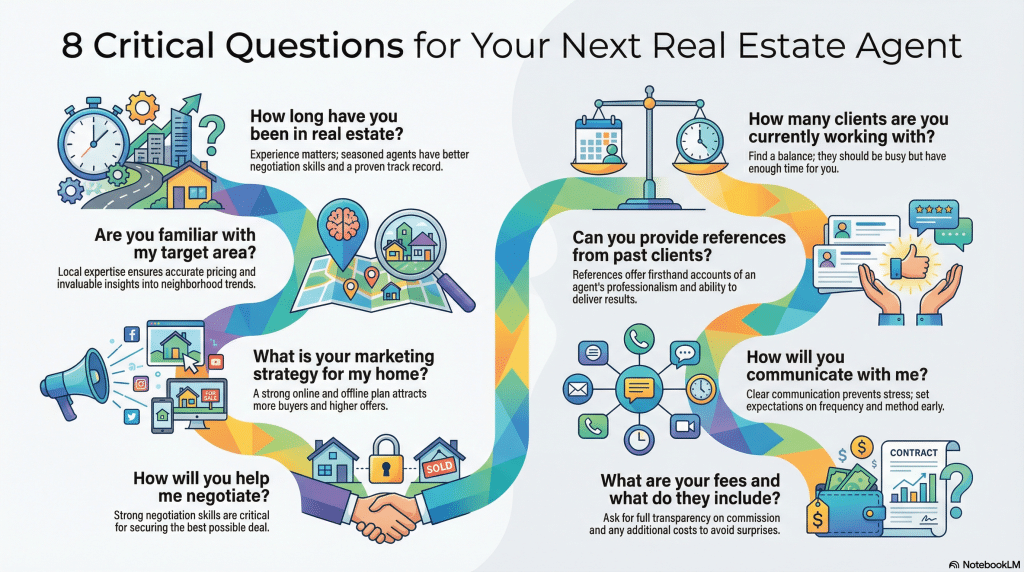
8 Essential Questions to Ask When Choosing the Right Real Estate Agent
It is essential to not only find a real estate agent but also to interview them thoroughly. Asking the right questions can help you gauge their expertise, professionalism, and ability to meet your needs.
Read on as we’ll outline 8 essential questions to ask before hiring a real estate agent, along with insights into why each question matters.
1. How Long Have You Been in Real Estate?
Experience matters in real estate. While newer agents can bring enthusiasm and fresh perspectives, seasoned agents often have a deeper understanding of the market, better negotiation skills, and a proven track record of success.
This question helps you assess the agent’s level of expertise and whether they’re equipped to handle your specific needs.
Why This Question Matters:
- Experienced agents are more likely to have encountered a wide range of scenarios, from bidding wars to tricky inspections.
- They’re familiar with market trends, pricing strategies, and local neighborhoods.
- A seasoned agent often has a network of contacts, including lenders, inspectors, and contractors, which can streamline the process.
What to Look For:
- An agent with at least a few years of experience in your local market.
- A willingness to share examples of past successes and challenges.

2. Are You Familiar With My Neighborhood or Target Area?
Real estate markets vary greatly from one neighborhood to another. An agent who specializes in your area will have invaluable insights into local market trends, property values, and buyer preferences.
They’ll also know how to market your home effectively or help you find properties that meet your criteria.
Why This Question Matters:
- Local expertise ensures the agent understands neighborhood-specific factors, such as school districts, amenities, and zoning regulations.
- They’ll know how to price your home competitively or identify hidden gems when buying.
What to Look For:
- An agent who has worked extensively in your neighborhood or target area.
- Specific examples of homes they’ve sold or helped clients purchase in the area.
3. What Is Your Marketing Strategy for Selling My Home?
If you’re selling a property, the agent’s marketing strategy is critical. A good agent will have a comprehensive plan to showcase your home to potential buyers, both online and offline. This includes professional photography, virtual tours, open houses, and targeted advertising.
Why This Question Matters:
- A strong marketing strategy can attract more buyers, leading to a quicker sale and potentially higher offers.
- In today’s digital age, online visibility is crucial. An agent should have a strong online presence and know how to use social media, real estate platforms, and email marketing effectively.
What to Look For:
- A detailed marketing plan, including how they’ll list your property, promote it, and attract buyers.
- Examples of past marketing materials or campaigns they’ve used successfully.

4. How Many Clients Are You Currently Working With?
This question helps you understand how much time and attention the agent will be able to dedicate to you.
While a busy agent may be successful, they may also be stretched too thin to provide the level of service you need.
Why This Question Matters:
- If an agent is juggling too many clients, they may not be able to prioritize your needs.
- On the other hand, an agent with very few clients may lack experience or struggle to attract business.
What to Look For:
- A balance: an agent who is busy but still has time to communicate with you regularly and prioritize your transaction.
- A clear explanation of how they manage their workload and stay organized.
5. Can You Provide References From Past Clients?
A reputable real estate agent should have no problem providing references from satisfied clients.
Speaking with past clients can give you valuable insights into the agent’s professionalism, communication style, and ability to deliver results.
Why This Question Matters:
- References provide firsthand accounts of what it’s like to work with the agent.
- You can learn about the agent’s strengths and any potential weaknesses.
What to Look For:
- Positive feedback about the agent’s responsiveness, negotiation skills, and market knowledge.
- Testimonials that align with your goals, whether it’s buying, selling, or investing.
6. How Will You Communicate With Me?
Effective communication is key to a successful real estate transaction. You’ll want to know how often the agent will update you, what methods they’ll use (phone, email, text), and how quickly you can expect responses to your questions or concerns.
Why This Question Matters:
- Poor communication can lead to misunderstandings, missed opportunities, and unnecessary stress.
- Knowing the agent’s communication style ensures you’re on the same page from the start.
What to Look For:
- An agent who is responsive, proactive, and willing to adapt to your preferred communication method.
- A clear plan for keeping you informed throughout the process.

7. What Are Your Fees and What Do They Include?
Real estate agents typically earn a commission based on the final sale price of the property. It’s important to understand how much you’ll be paying, what services are included, and whether there are any additional fees.
Why This Question Matters:
- Transparency about fees ensures there are no surprises later on.
- You’ll want to know if the agent’s services justify their commission rate.
What to Look For:
- A clear explanation of the commission structure and any additional costs.
- Services included, such as marketing, staging, or professional photography.
8. How Will You Help Me Negotiate?
Negotiation is one of the most critical aspects of buying or selling a property. A skilled negotiator can help you secure a better deal, whether it’s getting a higher price for your home or negotiating repairs and contingencies as a buyer.
Why This Question Matters:
- Strong negotiation skills can save you money or increase your profits.
- An agent’s approach to negotiation can reveal their confidence, expertise, and ability to advocate for your best interests.
What to Look For:
- Specific examples of successful negotiations in past transactions.
- An agent who is assertive but fair and willing to fight for your goals.
Bonus Tips for Hiring the Right Real Estate Agent
In addition to asking these eight questions, here are a few extra tips to ensure you find the right agent for your needs:
- Do Your Research: Look up the agent’s online reviews, social media profiles, and professional website. Check their credentials and certifications.
- Trust Your Instincts: Pay attention to how the agent makes you feel during the interview process. Do they seem trustworthy, knowledgeable, and committed to your goals?
- Ask About Their Team: Some agents work as part of a team, which can be beneficial if you need additional support. However, make sure you know who your primary point of contact will be.
- Compare Multiple Agents: Don’t settle for the first agent you meet. Interview at least two or three agents to compare their qualifications, experience, and personalities.
Why Finding the Right Real Estate Agent Matters
Hiring the right real estate agent can make the difference between a smooth, successful transaction and a stressful, disappointing experience. A good agent will guide you through the process, provide expert advice, and advocate for your best interests. On the other hand, a poor agent can cost you time, money, and opportunities.
By asking the eight questions outlined in this blog post, you’ll be better equipped to find an agent who meets your needs and helps you achieve your real estate goals. Remember, this is your transaction, and you have the right to choose someone who will work hard for you.
Buying or selling a home is a significant milestone, and having the right real estate agent by your side is essential. By asking these eight questions—about experience, local expertise, marketing strategies, communication, and more—you can ensure you’re hiring someone who is knowledgeable, professional, and committed to your success.
Take the time to interview multiple agents, do your research, and trust your instincts. The right agent will not only make the process easier but also help you maximize your financial returns and achieve your real estate goals.
Deep Dive Podcast
Check out our Deep Dive Podcast.
Real Estate Crunch gives you real property and real estate information and advice. We offer a free monthly newsletter; you can sign up for our newsletter by clicking here.
We also have a weekly podcast called “Real Estate Crunch,” found on all major podcast platforms. Listen to our podcast by clicking here.
Follow us on our social media platforms – Facebook and Instagram.
Related Questions
Why Is Real Estate Called ‘Real Estate’?
Real Estate is one of those series of words that many of us use daily. We may not realize the history and story behind why real estate is called “real estate.”
The word Real Estate comes from the Latin word realis, but it refers ideally to the physical and economic characteristics of real estate or real property. The word Real Estate can date back to the 17th Century. Today, Real Estate is a legal term used in many English-speaking jurisdictions worldwide.
By clicking here, you can read more about Why Is Real Estate Called ‘Real Estate’?
What Is A Life Estate? Real Estate Explained
A life estate is when a person is granted the right to use the property for the term of their life. Once the life estate holder dies, the property is passed on to the owner. The individual who holds the life estate does have rights to the property and can usually still get income from the property for the term of their life.
By clicking here, you can read more about What Is A Life Estate? Real Estate Explained.
What Is A Proof Of The Ownership Of A House?
Buying and selling real estate can be a highly complex matter. There are many types of documents that you need to know about.
The deed is the proof of ownership of the house or land. The deed is a legal instrument that shows who owns the home and land. There are many kinds of deeds, from the warranty deed, special warrant, bargain and sale deed, and quitclaim deed. Even though they have some similarities, these deeds also have many differences.
By clicking here, you can read more about What Is A Proof Of The Ownership Of A House?